Garden Planting Time! (Or Ghetto Greenhouse Part III)

ready to plantOk, HERE is the planting article I started to write before I got distracted by the raised planting bed subject.
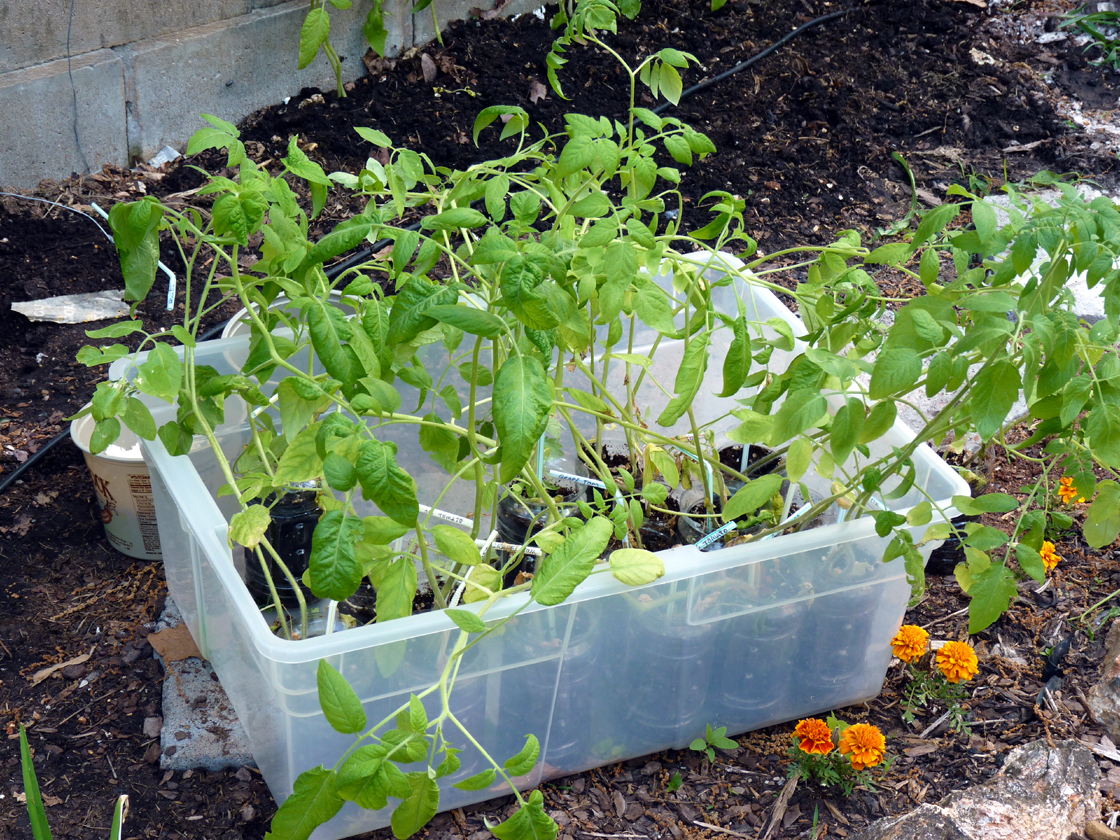
Only our peppers and tomato plants were started in the house and transplanted as seedlings, everything else I sowed directly into the garden as seed. The seed planting was fun with the kiddo, but I learned the hard way not to let her handle delicate new vegetable plants, even ones that have been well hardened off. She broke several before I found her an alternate job to do. I left the broken ones in their original plastic bottle containers. Maybe they’ll grow new leaves, maybe they won’t. As you can see from the pictures, I didn’t have any shortage of tomato plants, so I wasn’t too upset about the loss of a few.

These were the plants that I started from seed back in February or March. In the past couple weeks, when it FINALLY stopped snowing here and the night temperatures were above 50F, I began the process of hardening off the plants. Pepper plants shouldn’t be transplanted to the ground until the earth has warmed to at least 50F; to do so earlier could kill them or hinder their growth until warmer weather comes. Tomato plants are a bit more forgiving, but you have to cover or shelter them if there is any danger of frost.
EggshellsHardening seedlings off basically entails getting those house-protected seedlings acclimated to being outdoors in a less controlled environment. The absolute best time to put them out is a cloudy day with a slight breeze. The breeze helps the stems to stiffen up so they can support the plant’s top growth and the cloud cover helps keeps the sun from scorching them. They’ll love all that sun later, but when they first come out from inside, they are a bit sun-shy. If you don’t have cloud cover, just sit them in at least partial shade. I put mine out for a week before transplanting them to the garden, starting off with only a couple hours and working up to 6-8 hours a day. The day I planted was also partly cloudy, which was helpful to avoid a lot of stress during transplant.
I don’t use my plastic containers more than one season. I’m not absolutely sure whether or not those water or Gatorade bottles are BPA-free and since I’ve read that the chemicals can leach into soil or be absorbed by plants when the plastics begin to break down, I just cut them off the roots and toss them when I plant. Cutting them off also means I don’t have to disturb all those tiny little roots any more than absolutely necessary.

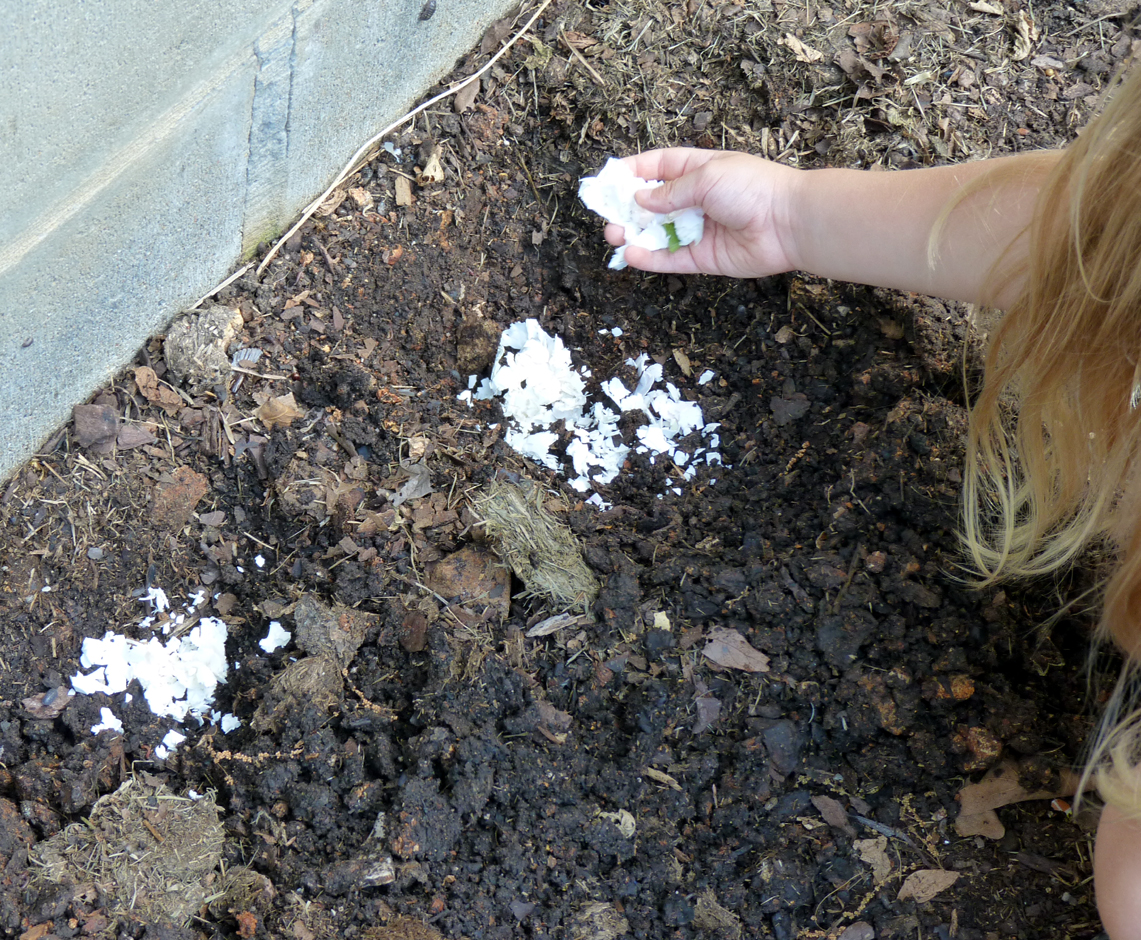
I dug the holes, making them deep enough to plant each seedling at least as deep as it had been in its container- deeper for all the tomatoes, since they will grow new roots along the buried stems. Soil additives are the perfect task for little helpers; I had a bowl full of crushed eggshells and another of used coffee grounds to add to each hole. I instructed my daughter to get a big handful of eggshells and put it in the bottom of each hole. Coffee is a good green soil additive and gives the plant a nitrogen boost; we followed the eggshells with a handful of coffee grounds.PlantTomato
I’ve planted my tomatoes with crushed eggshells since my first attempt at growing tomatoes resulted in about 25% of them getting blossom rot. Blossom rot is fairly common in tomato plants and can often be prevented with good watering practices and adding calcium to the soil. Since eggshells release their calcium slowly, I add some to the hole when planting and top-dress more around the plants throughout the season. You can also save water from boiling eggs, cool it and use it to water the plants. They are also a great slug and snail deterrent; they don’t like to drag their soft little bodies over all those sharp edges. I don’t add extra fertilizers or plant food to seedlings, since I already grow them in soil amended with Miracle Grow Garden Soil and home-made compost.
After my daughter broke several plants trying to separate them from each other, I put her on additive and seed planting duty so I could pull the delicate plants out of their containers- I told her this was a Mommy job since it required sharp scissors 😉 – once the plant was in place, I helped her scoop some dirt back into the hole and pat it down very gently (don’t break the stems) to hold them in place. If you have trellis or stakes to add, you’ll want to do it NOW while your plants are small, even though it may seem unnecessary until they actually need the support. Add it later; you may damage the roots when you jam the spikes or stakes into the ground or snap off the vines trying to weave them through your supports. I have a sort of permanent trellis attached to our house of thin, bendable wire. I originally planned these to support climbing roses, so they are quite strong and support cucumber and tomato plants well. I found I preferred them to cages, since they keep the plants spread out, the fruits are easier to get to, there are less areas for bugs to hide and plenty of air circulation to prevent fungus or mildew. Whatever you use, make sure it’s going to be strong enough to support fully mature plants with fruits on them. I was surprised at first how HEAVY they can actually get!

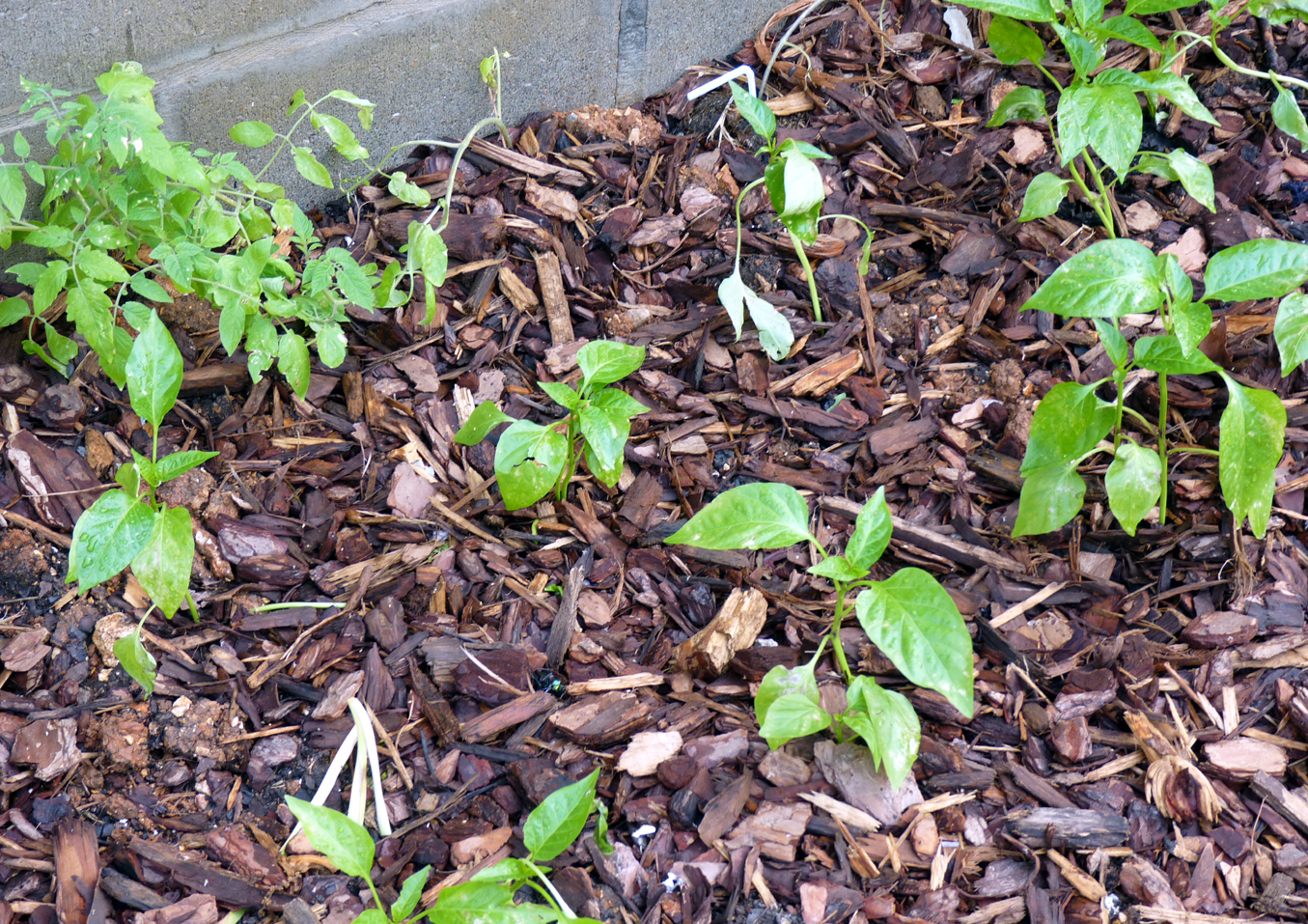
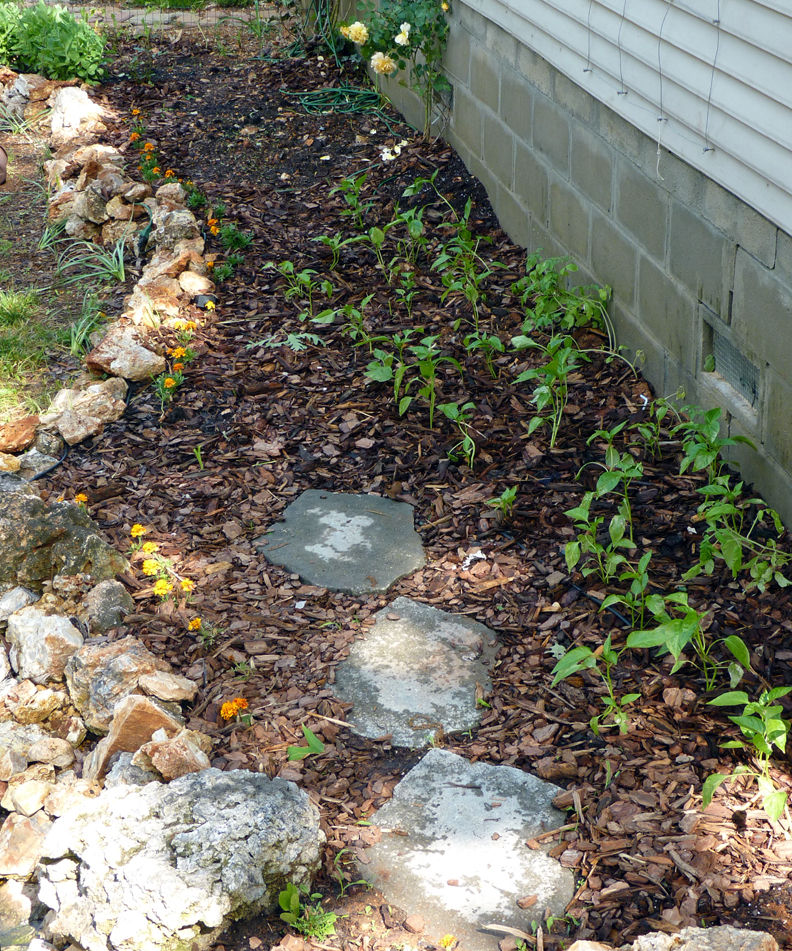
GardenPlantsSince I was planting full size plants and not direct-sowing seeds, I went ahead and added mulch around the plants. Mulch really helps new seedlings retain moisture since they don’t have deep, established roots yet. The chunky pine mulch also helped some of my floppy plants stand up a bit straighter until their stems strengthen enough to support themselves. I skipped the mulch over the areas where we put just seed, to make sure the new seedlings are able to get enough light and heat to germinate. Once the plants are up and established, I’ll weed around them and add mulch then.

At the height of summer, it easily reaches the 100 degree mark here; I usually have to water at least every third or fourth day if there’s no rain to supplement. Too frequent watering won’t encourage your plants to develop deep roots and they will dry out quickly and have little support for bushy top growth. Soak them really well when you do water. Aside from this, there are really no hard and fast rules on watering; check your soil and watch your plants, a little common sense will tell you whether they are dry and need a drink or not. Morning and evenings have worked best from my experience; mid-day burns off quickly and seems to shock the plants that get doused with cold water when they’re really hot. I’ve read lots of advice about not getting the leaves wet because it causes fungal diseases, etc. This is fine advice if you can avoid it, but if you get the leaves wet, it’s not the end of the world. Rain doesn’t JUST water the roots of a plant when it falls.GardenPlanted
It helps to plant things like lettuce, broccoli and other plants that bolt in hot weather behind your trellised plants to provide them with some shade. Our garden area gets blasted with full sun from around noon-thirty until 4-ish in the afternoon, so the sun really beats down during that part of the day. I’ve noticed that my tomato plants will look a bit wilted during the really brutal summer days, but they always perk back up in the evening when it cools off a bit. I’ve read somewhere that this is a normal defense-mechanism of the plant and nothing to get excited about.
So I guess that’s finally it for the starting plants from seed subject; since I’ve seen them from package into the garden and it’s all maintenance from here. I’ll try to remember and post at least a few photos of our garden once it is well established and producing. I’m keeping my fingers crossed for no beetle horror stories this year in the meanwhile, but we’ll see. 😉

Raising Dirt

Raised BedThis article originally started out as a planting guide for those seedlings I’ve been raising, but then I realized there might be a bit I could say on the subject of where those seedlings will be going once they are ready to move outdoors. Most of you already have your gardens in for this year, unless you live in the northernmost climes. Here in Missouri, I normally have my garden in and established for several weeks by the middle of May; however, it was still snowing the first week of May this year so everything got a late start.

I garden mostly in raised beds, so this article will be relative to that form of gardening. If you are planting directly in the ground, then obviously there is a bit more prep work involved. The soil here, unless you venture into the woods, has very little or no topsoil and is almost all rocks and red clay. It isn’t impossible to grow plants in with a lot of amendment and effort, but it’s certainly not the easiest in the world to work with. For trees, bushes and large landscape plants, I cope with the clay. When it comes to planting flowers and vegetables though, I prefer my raised beds.

I’ve seen raised bed kits in the seed catalogs and in garden centers at the hardware store. You don’t need a fancy kit to build a raised bed and they don’t have to be very high to be beneficial. My first raised bed, the one I use for most of our vegetable garden, was built from rocks I dug up in the yard or found in the surrounding woods.
I learned by watching my dad, who built a raised area in Mom’s yard for her above ground pool to sit on. He started with a layer of large rocks that he buried slightly in the ground, and then added dirt to the top of the first row of rocks. He then added another layer of rock on top of the first and backfilled that with still more soil. It’s sort of like building steps, but with rocks.
In our area of the country, you don’t even need mortar to hold your beds together; the clay will usually serve that purpose. I will say this- if you aren’t using very large rocks and/or you will have small children or animals around the beds, then you may want to use some sort of mortar or landscaping adhesive to hold everything steady. My 4 year old kicks rocks out of the flower bed all the time, so far I just pick them up and put them back in place.
Her dad built a raised bed of her own this year; I had asked for a raised planter next to our composter for extra vegetable space, he added a small rectangle next to mine for her to plant. Both boxes were built from lumber scraps, held together with L-brackets in the corners for strength. We put a few veggies in hers; some garlic bulbs and snow peas, but mostly Mexican sunflower and marigolds. I wanted things that were almost foolproof to grow; she’s been out to check her bed every day since we planted it and was thrilled to find tiny seedlings sprouting after last night’s rain.
Planting things in raised beds is a lot like container gardening, except your containers don’t have a bottom. I’ve seen all sort of materials used; lumber, landscape timbers, railroad ties, concrete blocks, rocks picked up from the yard, old tires, lined cardboard boxes, stacked clay pots and so on. Mostly, choosing a material to build a raised bed is a case of aesthetics. Pick what suits you, your style and your yard. One note of advice however; I’ve seen many pins on Pinterest of people growing vegetable and herb gardens in beds of railroad ties, treated lumber (guilty- although the lumber I used it almost 10 years old) and concrete blocks all of which can leach chemicals into the soil and from there into your plants. If you’re planting for food and the chemicals concern you, consider avoiding these for your raised bed frames.HardwareCloth
We have so much rock here that gophers and moles haven’t been a serious issue, but I’ve noticed further north where the soil is much looser and the topsoil deep, the underground critters are fairly rampant. If you’ve noticed a lot of activity in your yard from root-munching rodents, you might want to lay down a sheet of wire mesh and build your bed on top of that. You can find it in most lawn and garden centers on a roll near the poultry netting and garden fencing. The ¼ inch stuff works brilliantly for this; it’s small enough that most rodents can’t get through, but allows worms, water, air and soil to pass through. I stole this photo from Google, as I would have had to go up to our storage shed where the old rat cage is and take pictures of hardware cloth. We lined the outside of a bookshelf with it as a cage for our fancy rats. They chewed through the bookcase; but couldn’t get through the hardware cloth. It will protect your carrots and potatoes in exactly the same way from gophers and rabbits.
Depending on the soil you intend to use, you may want to put down a drainage layer on top of your hardware cloth. I used native soil and leaves to fill about half my container, then store-bought garden soil and my own compost on top. You can layer fall leaves and small bits of sticks on the bottom for drainage, then a heavier layer of soil and finally compost and lighter materials on top if you like. Top it off with a layer of mulch once your plants are established. You want the beds to be able to drain, but not so fast that you have to water constantly. Raised beds will dry out a bit faster than a garden planted directly in the earth, so keep this in mind when planning your watering schedule.
A little tip I picked up from Paul James, the garden guy that used to do Gardening By The Yard on HGTV, is that a little fall prep for raised beds and even for in-ground gardens can save you a lot of hoeing, tilling and digging in the spring. I saved all my cardboard boxes for a couple of months, starting at the end of the summer. In the fall after I’d cleared the dead plants from my garden, I put down a thick layer of cardboard over the entire area. So I didn’t have to look at cardboard boxes all winter, I covered the boxes with a layer of black weed barrier cloth, anchored by landscape pins. The cardboard breaks down over the winter months. It allows water to penetrate, but helps to keep the earth beneath it soft. If you’ve never had the pleasure of dealing with clay soil, you have NO IDEA how helpful that is. If you have, then you know that clay turns to concrete when it’s dry and tar-like muck when it’s wet. The cardboard breaks down into the soil, loosening up the particles of clay and making it much more workable. It also speeds up the breakdown of leaves or mulch left on top of the garden, adding more organic material to enrich the soil. Where I didn’t have cardboard, I piled up the leaves and left them in place until spring. Rake them off when you’re ready to plant and you have soft, black, workable soil. No tilling, hoeing or hauling of garden soil necessary. Dried leaves help acidify the soil as well, good to know if you’re growing acid-loving plants like blueberries. An added benefit of the cardboard/landscaping fabric layer was that it kept weeds and crabgrass from sprouting and helped to heat up the raised beds for planting a bit faster than the actual ground temperature.
RaisedBedsThis same trick works for an in-ground garden, although it may require more than a single season to see the dramatic results I got in already soil-amended raised beds. The reason there is good top soil in the woods around my house and not in my yard is thanks to the bulldozers that cleared the land before they built our house here. They scraped off every ounce of topsoil and left all the exposed clay and rocks on the surface instead. Conversely, the woods that weren’t disturbed have years and years of leaf buildup on the ground, rotting slowly and turning to rich, dark soil underneath. Trees in the woods create their own mulch and compost. Tilling up the earth exposes the soil to air and water that can rob it of nutrients. It dries out the topsoil layer that protects what’s underneath. If you want your garden to grow big, healthy plants then you have to put back some of what is lost when you clear and till the soil.
MULCH ALL THE THINGS.
I can’t even stress how important this step is and it’s one that is often ignored. Mulch is a young plant’s best friend. It holds topsoil and soil amendments in place, it prevents erosion, and it protects the upper layers of soil from sun scorch. Mulch helps plants and soil retain moisture, so mulched plants need less watering. Organic mulches break down over time and enrich the soil composition, adding nutrients and helping to break up soils with tightly packed particles like clay. In sandy soils, they add bulk and keep the water from just running through. I’ve read studies that claim some types of mulch even encourage your plants to grow faster because of the increase in certain light spectrums when reflected back up to your plant. Tomato plants especially, are said to benefit from red-colored mulch.
I tend to favor pine-mulch; not because it does anything special, I just love the smell.
So… for a post that was originally supposed to be about garden plants, I rather ran off on a tangent. Then again, you can’t have healthy plants without healthy soil. No matter where I start, it always seems to come back around to dirt.  🙂

-B

Brrrrrrr

Snow. In. May.
Seriously, you northern folks take this in stride I’m sure, but it’s something I haven’t seen in mid-Missouri in my entire life. In fact, I talked to a gentleman in the convenience store earlier today that told me he hadn’t seen it snow here in HIS lifetime; he said he was 70. So I took photos and video of our freaky little winter in spring.
MaySnow 003

Ghetto Greenhouse Part II

IPlastic Bottle promised an update when I transplanted seeds… I’m a bit late since I actually did this almost 3 weeks ago. I did save the pictures though, so I can still run through that bit. My daughter is at school and I didn’t want to be covered in joint compound and drywall dust to go pick her up, so I have almost an hour to write! 🙂

So seed starting next steps…

We drink a lot of bottled water and Gatorade which comes in plastic bottles and yes, I know, it’s terrible for the environment- but, I reuse mine for all sorts of things instead of just tossing them in the trash. Seed starting time for instance, I save bottles for several months and use those for my transplants instead of buying seed starting kits at the store. It saves money and it helps recycle many of those bottles that would otherwise wind up in trash. Clear plastic bottles make excellent seedling starters for several reasons; they are thin enough to cut through with household scissors and don’t require special tools, they hold water well without disintegrating like paper pots or peat pots, they are the ideal size for individual seedlings, are easily transportable if you’d like to give some plants away (which I do every year) and best of all, you can actually SEE the root development on your plants. There’s no questioning whether the root systems are well established and ready to plant, all you have to do is take a look. It’s also fun to be able to show my daughter all parts of the plant so that she she can see how they grow, not just the leaves and stems above ground, but all those essential roots too.

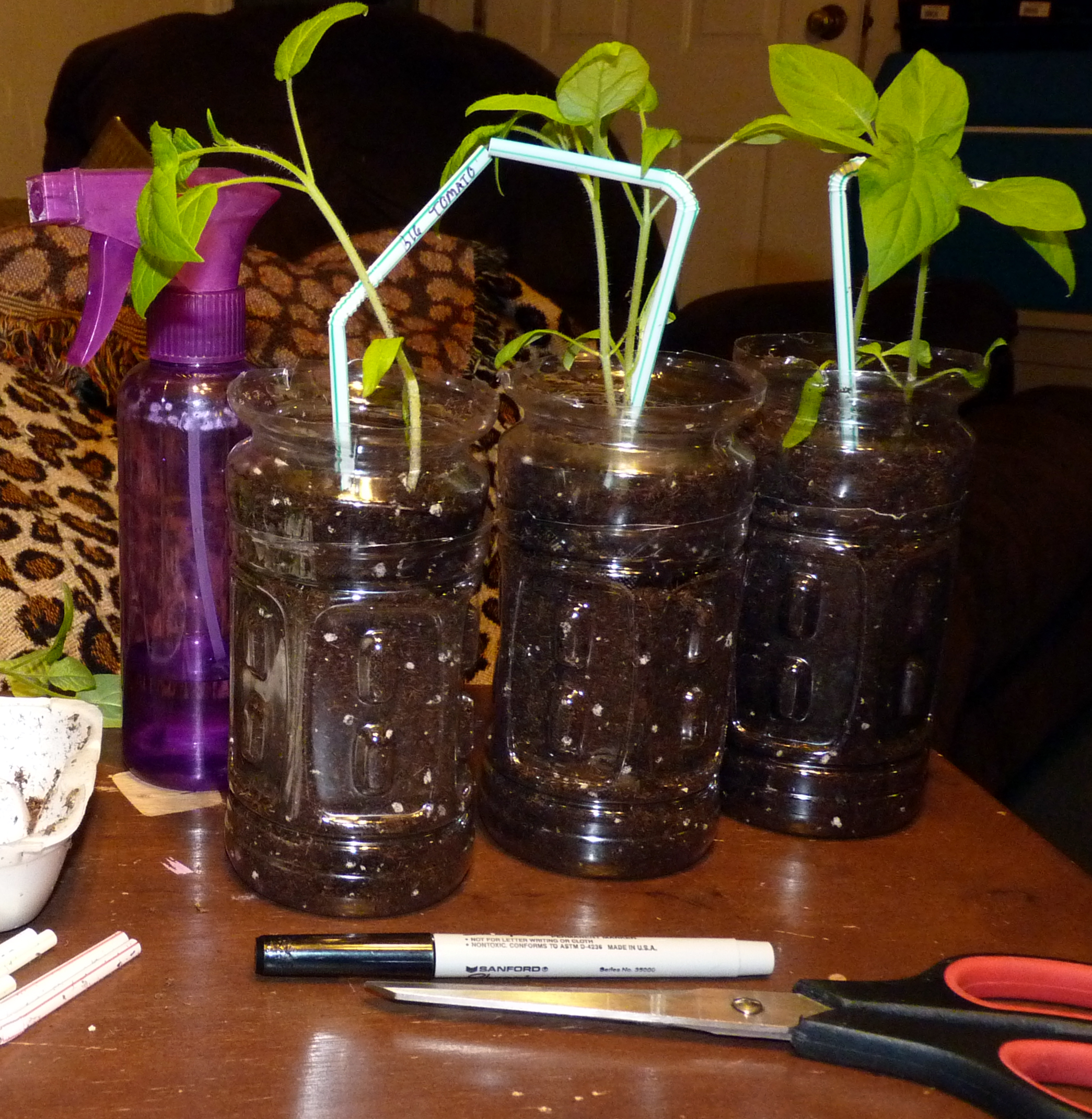
1) I prefer the 20 oz. Gatorade bottles for my transplants, but I use 17 oz. water bottles as well. The Gatorade bottles have a wide mouth, so I take the tops off, cut the bottle just above the label and turn the top upside down inside the the bottom. (Like in the photo) I filled both the top and bottom with soil. I’ve seen some gardeners cut the bottle closer to the middle, put soil only in the top portion with the roots sticking out the mouth and use the bottom to fill with water- makes a sort of self watering planter.
The water bottles I just cut the tops off above the label and only use the bottom 3/4 of the bottle as a container.

teaspoon and straws2) Roots are the single most important thing to the success of seedlings. Mine were a little leggy from starting off with not quite enough light, so I buried them deep,  leaving all that extra stem below the dirt. Tomato plants will just grow roots along the extra stem and give you a better root system. I used the seed starting soil again from Miracle Grow, since it claims to support and help create  healthy roots. I used a tablespoon from the kitchen to lift the seedling’s root ball out of each egg carton cell. You have to be VERY gentle when transplanting seedlings. The stems and leaves are  soft and delicate, not like those already hardened-off, ready to plant greenhouse plants you buy at the nursery. They’ll get there, but right now they need a little extra TLC when moving them about. The spoon helped me lift out the entire root system of each seedling with minimal handling of the stems and leaves. Those seedlings that didn’t have great roots established or were smaller, weaker plants I didn’t transplant. There are SO many plants when you start from seed, you can afford to be selective and choose your strongest and best growers.  I put only one or two seedlings per bottle, depending on how large they’d grown in the egg cartons.

3) As you transplant each seedling, you want to make sure and label them. I’ve used cut up pieces of the egg carton tops in the past, I forgot to save them this year. >.<
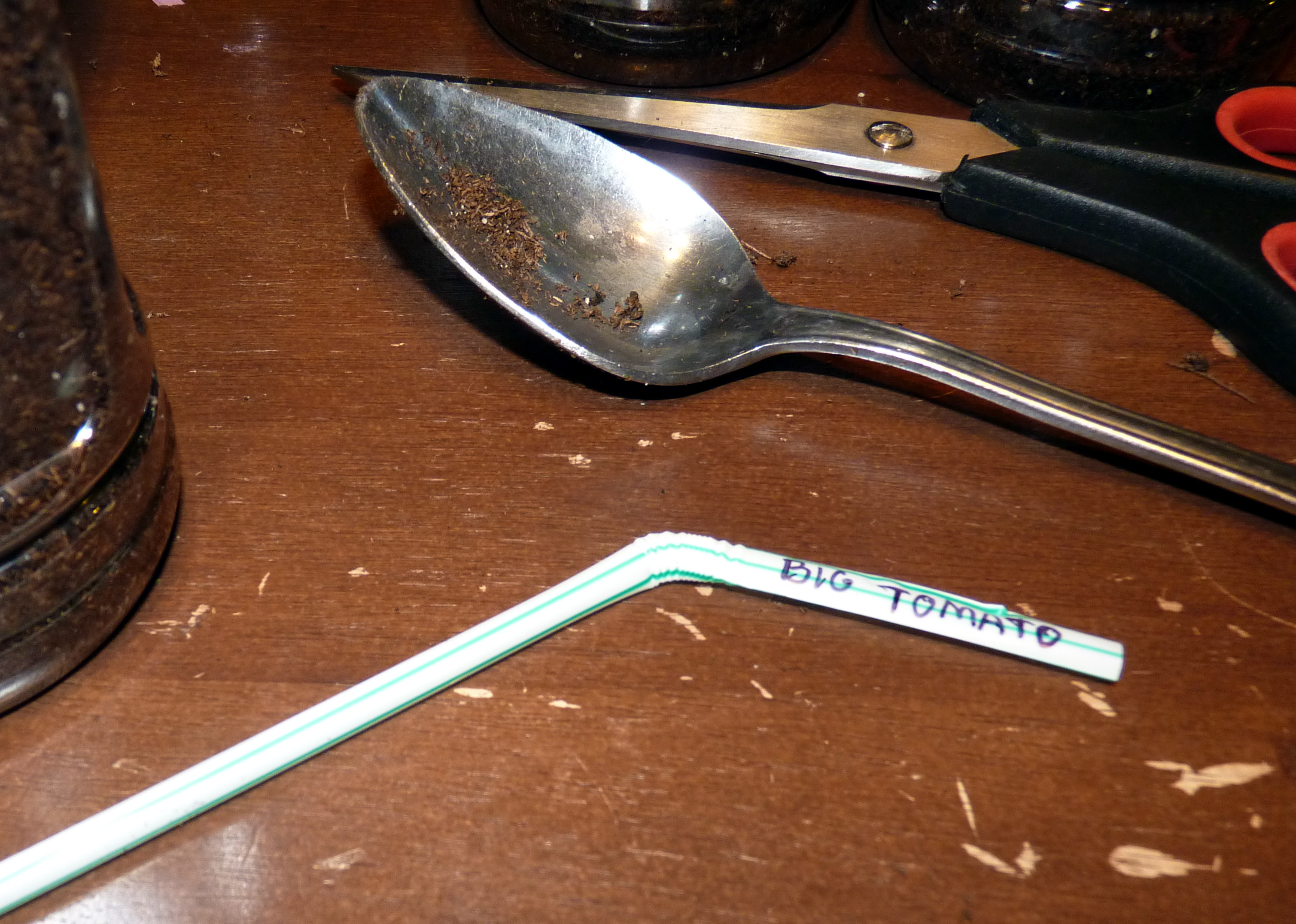
I’ve seen quite a few gardeners use Popsicle  or craft sticks, writing on them with a permanent marker. I didn’t have any of those handy; what I did have was a huge bag of bendy straws that had only cost me about $1.48 for the entire bag. I bent the straws, wrote my tags on the bent part and stuck the rest of the straw in the dirt.
Added bonus, the straws acted as little stakes to support the floppy plants until they grew into their new homes.
Tomato SeedlingObviously, you can tell pepper plants from tomato plants by their leaves fairly early on. If you’re planting more than one variety of tomato or pepper though, as was my case, you might have a difficult time discerning which is which until they start to flower or fruit. If you’re giving plants away or want them in a very specific place in the garden, you don’t want to have to play a guessing game, so label everything. Unless you like surprises…

4) Once the seedling is planted in the bottle and labeled, you’ll want to give it a good drink. I use an old Tide liquid laundry soap bottle with a few holes poked in the cap. It works better than the huge water pitcher I use for my house plants, giving enough control to water the seedlings thoroughly without drowning them. If you’re concerned you’ll overwater, poke a couple drainage holes in the bottom of your bottles. Make sure to sit them on trays or in troughs if you do that though! I used the black garden trough that was the bottom of my greenhouse and commandeered a plastic crate from the closet; pepper plants went in one, tomatoes in the other. Segregating them keeps them out of trouble. For some reason, my tomato plants try to wrap themselves around other plants if they’re too close. They’re territorial little buggers.
The reason for the big containers is to make it easy on you when it’s time to start the hardening off process. You’ll be moving your seedlings in and out of doors (unless you have a greenhouse or cold frame) and it’s much easier to carry large tubs than move 30 or more individual plants. Even using trays last year, I had some near deaths when plants decided to base-jump off the trays while I was walking.
The tubs are also real life-savers if you need to move your plants FAST. Mid-Missouri is notorious for strong spring storms from March – May. New seedlings break in strong winds, are crushed in torrential rainfall and torn to bits in hail storms. If you live anywhere near the middle of  the country, you know storms can come on fast and be unpredictable. Being able to move your plants quickly can save you from starting over.

5) I removed the plastic cover over my ghetto greenhouse when I transplanted to bottles. They have plenty of soil around the roots now to hold water, they didn’t need the extra protection of plastic over them. Keeping the cover on will filter your light too, which can make them leggy. Even with the additional light source, my seedlings always seem to be slightly leggy plants. One thing I have found to help remedy this is to have the window open as much as possible so they get a breeze. I also put a fan on them sometimes, it makes them feel pretty when their hair blows in the breeze. Ok, in truth, I do this to make them stand up and grow a backbone- a slight breeze during the hardening off period, strengthens the plant’s stems. You don’t want wimpy plants that lie there and look pitiful when you move them out to the garden.TomsPeppers
Until the hardening off period, I keep the light on them as much as possible and just check the soil with a finger to see if they need water. The clear bottles are handy in that respect as well, you can see if the soil is dry past the surface and how far down. I’ve been adding water about every 4-5 days.

6) Pepper plants like HEAT, so I won’t be moving these little guys into the garden for a few more weeks. I’ve read that pepper plants shouldn’t be transplanted outdoors until the ground temperature has reached around 65 F. This means that it should be staying in at least the 50’s during the night. If transplanted too early in cold soil, it can stunt the pepper plant’s growth, the leaves may turn yellow and the plants look sickly. Tomato plants aren’t as particular, but you shouldn’t put them out until all danger of frost has passed.
This year has been an especially cool spring and most of my landscape plants are off to a slow start. Last year, I had my entire garden in the last couple weeks of April; I’m thinking this year it will be more like the 2nd or 3rd week of May. Even if you do make the mistake of moving your plants out too early and you aren’t great at knitting tiny sweaters, you can heavily mulch and /or cover them during especially cold nights. (Plastic shower curtain liners make great frost covers, need to change yours?)
As long as it doesn’t kill the root, the plant may recover and do well once it gets the heat and sun that it needs.

I’ll write the final bit of this series when I move my transplants outdoors. In the meantime, I’m saving up all my eggshells and coffee grounds. Tomato plants need calcium to avoid blossom drop, a common tomato plant issue (eggshells) and leftover coffee grinds are a great green material for the compost pile.

-B

Life is what happens when you’re making other plans

And if you found yourself singing John Lennon just now, you may be telling your age like I am. 🙂
So, what the above means for those of you that aren’t Beatles fans, is that I’ve hit a bit of a snag in my long term plan recently. This also means I have to focus on some other projects that are non-yard or garden related for a while. I’ll still try to post all I can and get some of my already planned posts up here, but I’ll probably be spending most of my time wrapping up projects, rather than starting new ones. I’m still working on stuff and getting out in the dirt, just not in my preferred way. Rather than putting 75 trees into the ground this spring, I’ll be cleaning up old messes around the house, doing some construction and remodeling projects- stuff like that. I spent the weekend clearing out the pile of scrap lumber behind our house, rebuilding the little bridge back there and tearing apart our old benches, since the lumber had mostly rotted away.
Today I removed our bathroom sink, took the formica countertop off and started taping and mudding the new drywall in the master bath room. I am a VERY busy Belle right now. The upside to all of this is that I’m going to be in fabulous shape by the end of summer if I keep working like this. The downside is that I may not have as much time to write and dedicate to plant life as I would like. But this too shall pass and as soon as I get the necessary projects squared away, I’ll be back to planting and gardening with a vengeance.
FYI, if you need to remove Formica from a countertop without destroying the countertop, a household clothes iron works absolute WONDERS. I set it on the counter for a bit to warm up the glue and used a metal drywall knife and hammer to lift it right off.
-B

Forsythia

Forsythia BushThe bright yellow cascades of bell-shaped flowers on my forsythia bush join daffodils, hibiscus and magnolias as one of the early bloomers of spring. I’ve watched people at Lowes buy these plants en masse, wondering to myself if they realize just how large they will grow if left untended.

Forsythia are such a common bush in this part of the Midwest that I’ve seen them growing wild and taking over the entire fronts of abandoned houses. This was one of the first plants I introduced to our barren yard when we bought our house in March of 2001. I worked with a nurse that had a massive bush in her yard and was willing to part with a few of the new sprouts, “Take all you want. PLEASE.” She told me. From three tiny new starts with some good roots, I was rewarded with three good sized bushes in only a few years. Ten years later, the bush receiving the most sun (and possibly the best soil) is now the size of a car. I have absolutely no idea which cultivar of forsythia my yard is sporting; there are about 12 different types, all originating from Asia.

Forsythia are very forgiving and easy to grow, even for the most novice gardener. They do require some pruning to maintain shape; some cut them into hedgerows of squares or rectangles to use as a privacy fence. I always thought this looked rather odd and very unnatural however, I prefer them a bit wild and rambling. Forsythia drop tiny winged seeds in fall, yet in the twelve years I’ve had my three, I’ve yet to see a rogue bush sprout in the woods from seed. They can propagate by cuttings of green wood after they flower; the easiest way to get some (other than potted from a nursery) is to simply dig up some of the side shoots of an adult plant with a bit of root. Forsythia can be encouraged to create rows and spread simply by anchoring limbs to touch earth; roots will sprout from the anchored branch and begin to grow another plant next to the original. They can also be trained to espalier on a wall or trellis. In planting beds, they will need constant pruning to keep the growth habit in check; otherwise they can easily overwhelm the bed in a couple of seasons, growing up to 9 foot wide and 15 foot tall on a single bush.Forsythia Flowers

Forsythia are great plants for borders and slopes, they aren’t particularly selective of soil type, are deer resistant and the branches make gorgeous vases of cut flowers. The tight buds can be brought inside in winter and put in a vase of warm water to force blooms. The recommended care requirements list a minimum of 6 hours full sun, zones 4-9, occasional application of fertilizer and moderate watering. I can vouch for them being fairly drought tolerant; they showed little stress compared to other plants last year during the worst drought I’ve seen since we’ve owned our property. Mine are also planted in rocks and clay, I’ve never personally bothered with fertilizer, just the occasional application of mulch in the fall.

I don’t use my plants for anything other than ornamental purposes, especially since I’m not sure of the particular species. The Chinese use the species Forsythia Suspensa as a fundamental plant in herbology. The fruit is boiled and the essence is extracted for use in treating skin infections and boils, intestinal worms and to control menses. The roots have been used to treat colds, fever and jaundice; essence of the leaves and twigs are said to be useful in treating breast cancer. Laboratory studies have confirmed forsythia to have anti-tumor, anti-bacterial and anti-inflammation properties.

Here in the Ozarks, our forsythia are simply the heralds of spring. I watch them in anticipation of warmer days ahead; as soon as I start to see the tight buds open up a bit, I know spring is just right around the corner. J

Facebook

I finally broke down and made a Facebook page for Dirt. There are little things I do, take pictures of, etc. that would be relevant to the site, but aren’t really enough for a blog post.
Some things are only worthy of a  Tweet, a Facebook status or mention to the guy at the hardware store. So now I have a place for those too. Also, I’m hoping that posting on Facebook will help inspire me to keep writing and give me more people to talk to about my passion- all things dirt.
You can find me on Facebook at https://www.facebook.com/BelleOfDirt

-B

I’m officially “somebody”

Logged into Pinterest the other day to share my latest post and to my surprise, I had an invitation. It was for a board of Garden Tips with 3700+ followers.
So I guess this means I’ve officially been recognized as someone that reliably plays in dirt on a routine basis and may have posts… or in this case, pins, to share about it. Kind of groovy, I thought.  🙂
Thanks again, to all of you who read this little, slowly growing blog and especially those that have given Dirt shout-outs or shared my posts.
I’d probably write it whether anyone read it or not, but a little encouragement never hurts!
-Belle