Garden Progress Year 4

Whew! Ok, so finally caught up to the present.

Jim brought me several massive tractor loads of manure this year. Have I told you yet how freaking amazing our neighbors are? They invite us to stuff, they always seem happy to see us, they let my daughter come hang with their dog and collect eggs from their chickens. Jim brings me truckloads of manure, just because he knows I like to garden. Jim and his wife Sandy have been there for us more times than I can count already. They aren’t just neighbors, we consider them family. They are just amazing people.

So now I had two huge piles of manure. I’d already planned to build some raised beds this year and what better way to get them started…

Last year’s garden

My plan is to have the garden built in such a way that I only have to run the mower down the walkways and not spend hours and hours weed eating around beds.

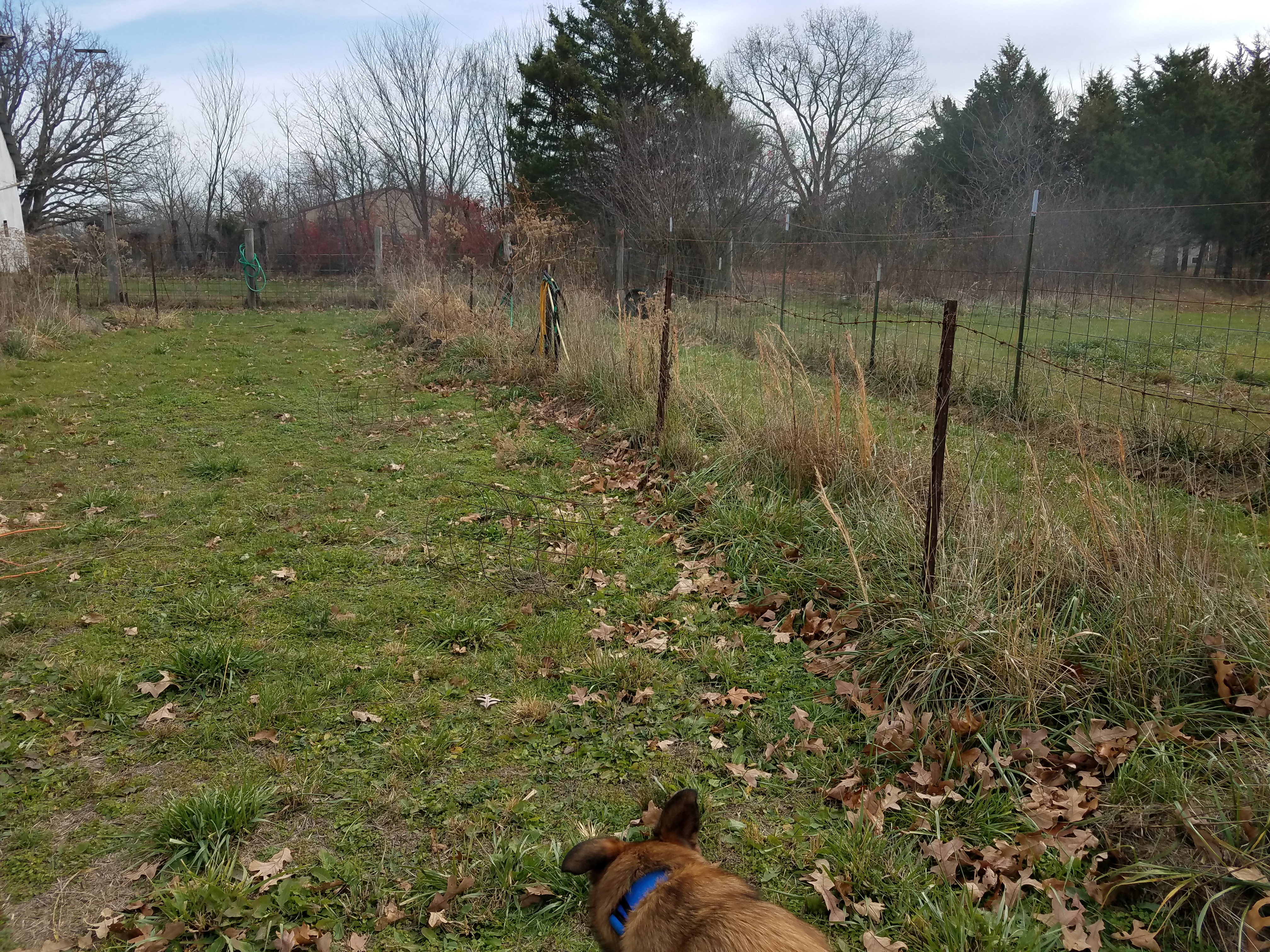
Also, there were so many holes in the fence, that the garden was basically a rabbit/ groundhog super buffet. I started replacing fence this spring. I have two sides finished, two to go. It’s a MUCH more difficult job with all the weeds growing, so I’ll probably wait for fall to do the other two.

I framed two raised beds- 8 ft long, 4 ft wide and 4 ft high. Filled the bottom of both with rotten logs, sticks, leaf mould and layered that with manure and rabbit compost. Dirt on top, plants, then mulch. Everything grew SO well, I’m going to have to rethink the trellises in them next year. They’re rather flimsy and just can’t hold 60lbs of tomato plants.
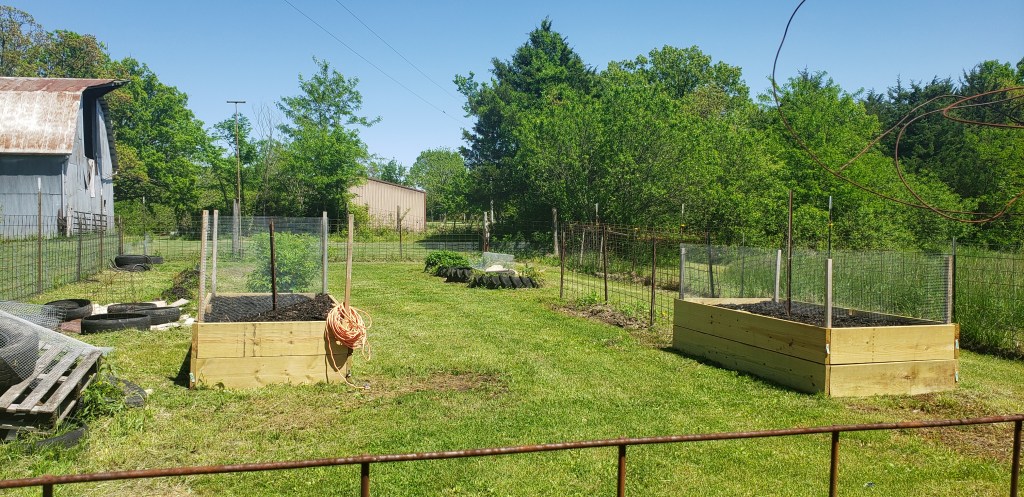
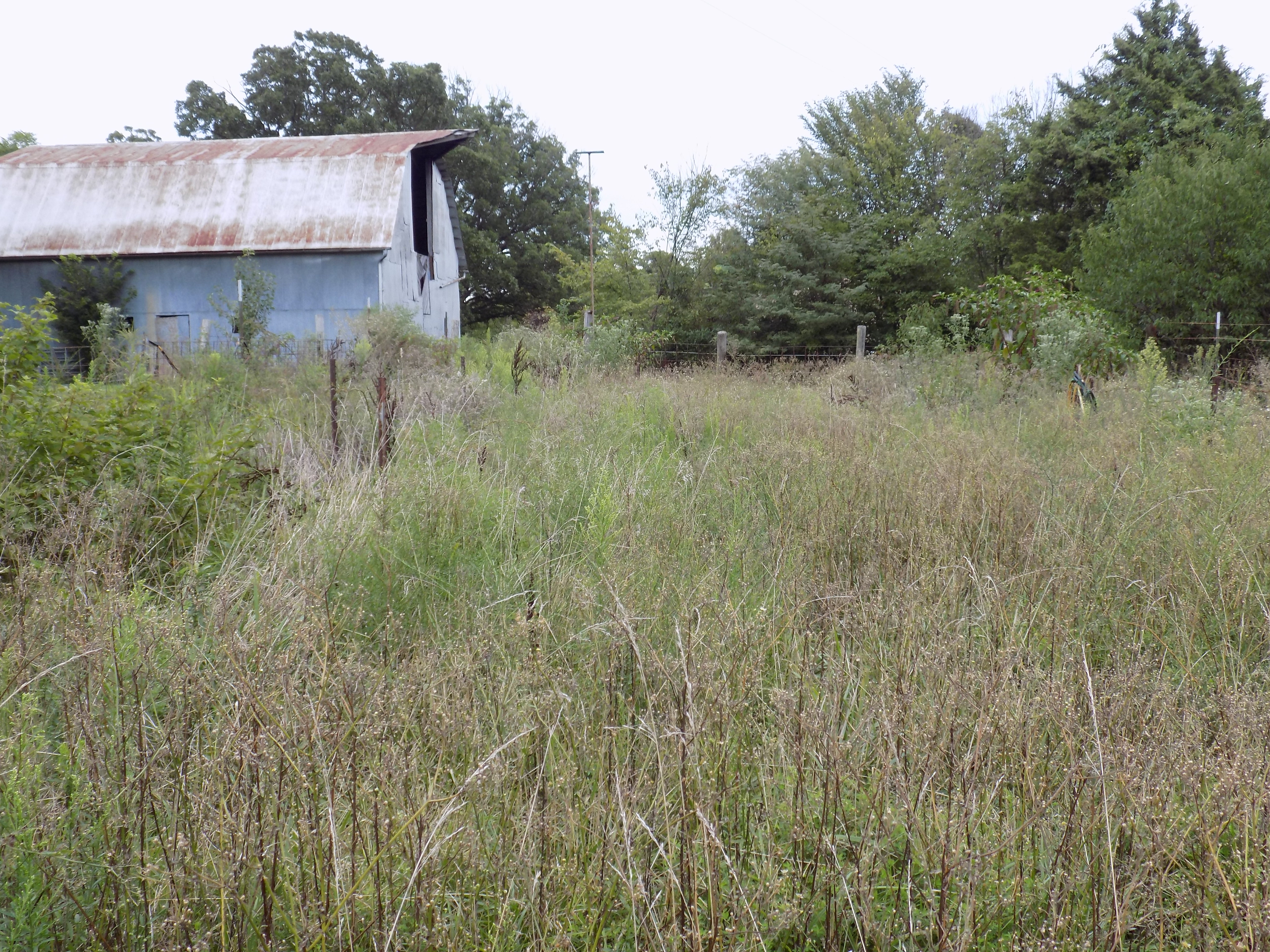
The bed I’d put my tomatoes in the two year’s previous I let rest this year. It looks a weedy mess, but will likely be getting its own raised bed next year.

All three tractor tires have strawberries now. Some June bearing, we added everbearing this year, but I’m going to have to address the birds eating them if we want any for ourselves.

My daughter helped me plant 11 blueberry mounds this spring, so far we’ve only lost 3. We’ve also added elderberry and blackberry all along the front of the garden.

I was spending hours and hours weed eating between the berry mounds though, so I put down landscape fabric over that entire area this past week. It will be getting a truckload of mulch this fall.

In planted gourds and pumpkins this year in-ground but so far I only have two gourd plants, one pumpkin plant and flowers, but no fruits yet. We’ll see… it’s getting kind of late in the season, I’m afraid if they don’t take off soon, they won’t at all.

I have in mind to get herb beds going for next year too, mostly to support my salve making and such, but maybe some to cook with too.

The pears 🍐 took a break this year, since I didn’t thin them properly last year but we got our first peaches this year, so our orchard may need lots of my attention next summer.

I need this garden as simple and low maintenence as possible, ya,’ll. A fact that will only be more true as years go by, since I’m now pushing 50. Four hours of weedeating in 90 degree heat and 70% humidity sucks when you’re 25. When you’re 47, you say to hell with it and just watch the weeds grow.

…or cover them in landscape fabric. I spend a lot more time these days planning how to garden smarter, not harder.

All caught up for now. I’ll try and get some pictures and relay my orchard dramas soon.

-B

Garden Progress Year 3

The third year I didn’t make many structural changes to the garden, though I did learn a bit from my plants that they desperately needed some form of compost.

The strawberries I’d planted in hugelkultur mounds were so thick with plants, I barely had to weed or water. I threw some mulch on them in spring and they did their thing.

We tried corn in the far tire, but it wound up with some kind of beetle that destroyed all but a few ears. Not really worth the trouble.

My watermelon 🍉 plants grew very well and were covered in melons, but we didn’t get a single one that summer. A raccoon discovered them and ate every one of them before they’d even fully ripen. After building elaborate cages, setting traps and dumping red pepper flakes everywhere for a month, I finally threw up my hands and let the little bastard have them.

I’m not trying melons again without electric fence…

They took some of the beetle ridden corn too, which I cared less about.

This was the year our neighbor Jim brought me a tractor scoop of cow manure, I started using it to build mounds for blueberries I planned to put in the next year. That fall I used it to amend beds that I felt were nutrient depleted, it made a huge difference in my tractor mounds the next year.

Hugelkultur mounds being built in tractor tires.

We had a HUGE crop of pears from the orchard last year, so I spent a lot more time focusing on orchard than garden. (Posts on that later)

I had to go dig these photos out of Facebook and couldn’t be bothered to crop the screen capture out. Don’t judge me. 🙃

-B

Garden Progress Year 2

Early spring the next year I started digging out the the big tractor tires. I emptied all the dirt out, added rotten logs, twigs,  straw underneath, then replaced the dirt. I planted one entire tractor tire full of strawberry plants, to replace the ones of Paw Paw’s that died.  (Only a fraction though, he had 7-8 small tires FULL.)

The second tractor tire I planted with bell peppers. 

My other big project for that year was the huge hugelkultur mound I put in along that row.  I removed all the tires and put in a section of cattle panel fence,  then built the mound around it. I had so many tomatoes that year,  we couldn’t use them fast enough. 

Cardboard down to kill weeds. SO many tires!

I threw a few cucumber plants in at the end of the mound, but they didn’t do great in the tires. The soil just got too compacted, the plants kept drying out and the fruits were most bitter.

We tried planting potatoes in some of the stacked tires too. They made a few, but were small and kind of sad.

I decided two years of 6ft high weeds had seriously depleted the soil and it was going to need some building up to do well for vegetables.

The entire left side of the garden I just left covered. I wasn’t sure what I wanted to do with it yet and the cardboard meant less weedeating.

My garden helpers 🙂

Doesn’t seem like a lot of progress, but I was also very busy that year cleaning buildings, getting the house in order, working on the rest of the yard and just trying to wrap my head around what to do next with this place.

-B

Natural Insect Repellent

I can’t remember if I’ve ever actually posted this before I Dirt and I can’t find it anywhere, so I guess at the risk of being redundant, I’ll post it again.

I’m not a fan of using OFF! insect repellents. First of all, I didn’t like using DEET all over Ely when she was little and the other best selling commercial insect repellent was that awful smelling Avon stuff. I’ve never been a fan of flowery-scented perfumes or sprays of any kind, in fact, some of them can send me immediately into an asthma attack if they are really strong and I’m around them for too long.

I started doing some research on plant based insect repellents and came up with several that were mentioned again and again.

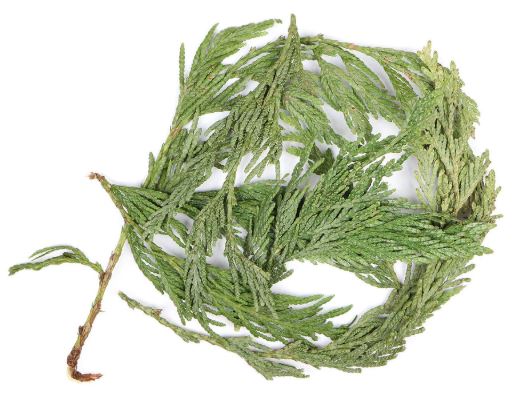
Bugs don’t like cedar. Cedar hangars or chips are often added to clothing storage options to deter moths from munching on your sweaters or wool items in summer storage. We also used cedar in our outdoor dog beds for years to keep fleas, ticks, spiders, snakes and rodents out of the dog houses. Cedar oil acts as a natural insecticide. It contains thujone, which is a terpenoid which repels, inhibits or kills insects like cockroaches, termites, some beetles, ants. etc.

cedarleaf

cedar leaf- mountainroseherbs.com

Lemon Eucalyptus oil. I had already been using regular Eucalyptus oil in sprays here at home. We had a serious recluse problem when we moved here- I even got bit twice, so I was willing to try anything to ward off spiders that I could. Spiders don’t like Eucalyptus oil, so I sprayed it around beds and under furniture, in closets, etc. It smelled nice and gave me peace of mind.
A few years ago, the CDC (Centers for Disease Control and Prevention did a study that found a mixture of 32 percent lemon eucalyptus oil provided more than 95% protection against mosquitoes for up to three hours and approved it as an effective ingredient in mosquito repellent. So I switched to using the lemon eucalyptus, might as well repel spiders AND mosquitoes.

lemoneucalyptus

lemon eucalyptus rainshadowlabs.com

Peppermint oil smells like Christmas and I use it in my mop water to make the house smell fresh, so to me it smells “clean” as well. It also works pretty effectively at repelling flies. When I’m outside in the garden, the flies love to hang around and bite any exposed skin they can find. They will torment to death your poor livestock too, but DO NOT spray this stuff on your horses face, as peppermint will burn and sting like crazy if you get it in your eyes.

Peppermint_Oil_1200x628-facebook

peppermint oil- healthline.com

I’ve also had friends say they used vinegar in their fly sprays, but I don’t like the vinegar smell, so I skip it. So the spray is very simple:

To a large spray bottle of water (I use an old Windex bottle), I add about 30ml of cedar oil, 10-15 drops of lemon eucalyptus oil and 10-15 drops of peppermint oil. Shake up the bottle to blend it all together.
I spray this all over my clothes before going into the woods or out into the garden. I spray it on my hat, my gloves, shoes, etc. It keeps the ticks, flies and mosquitoes at bay for several hours, it smells fresh and earthy instead of like flowery perfume or chemicals. I even put it on exposed skin- just be careful not to get it near your eyes- it WILL burn. I spritz around the picnic tables with it if we’re going to be sitting out there. I use it in the house to repel sugar ants, spiders and kill gnats. It is hands down the best natural insect spray I’ve ever used. We haven’t bought a can of Raid for years.

Try it out, let me know what you think!

-Belle


Cracked up tomatoes

Since we’ve have a week of cooler than normal late July/early August temps here in Missouri, accompanied by almost daily rain AND I just got back from picking tomatoes in the garden, I thought it might be a good time to talk about one of the most common tomato growing issues: cracking.

If your tomatoes are cracking up and you aren’t finding the humor in it, there are a couple of things you might be able to do to stop it, depending on the type of cracks you have.

images

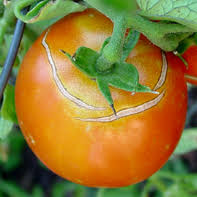
Concentric cracking is when you see cracks that run around the tomato in little rings, usually at the top near the stem. This is especially common to see on the larger beefsteak variety tomatoes, although I’ve seen it on smaller ones as well. I don’t think I’ve ever see it occur on a cherry, grape or pear variety and seldom if ever on a Roma. About the only thing you can do to prevent this type of cracking is select tomato varieties that aren’t as susceptible to it. It is a genetic characteristic and is kind of like stretch marks on a pregnant woman’s belly- it leaves behind scarring and lines, but it doesn’t damage the fruit beyond usability.

Concentric cracks generally scar over, keeping bacteria, insects and rot from happening. If you can’t deal with ugly tomatoes, look for the ones that are described as smooth, perfect or have a notation about being crack-resistant. Fruits in full sun are more susceptible as are fruits growing in high temperatures; both conditions cause thickening skin in tomatoes and make the skin less elastic, so more prone to splitting. You can try picking tomatoes sooner, before they are quite ripe, but you may have to sacrifice some flavor for beauty.

concentriccracking

UGLY maters

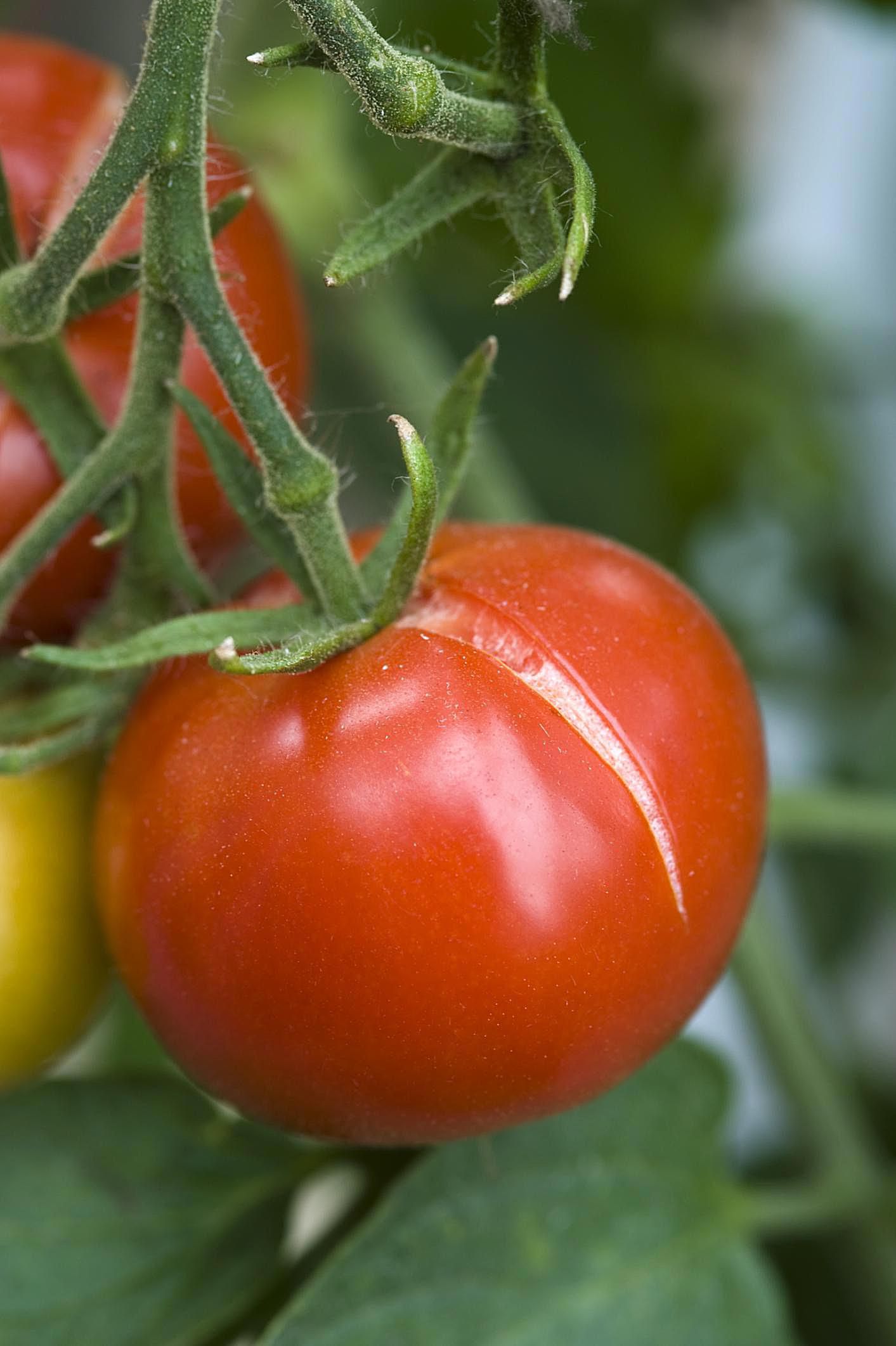
Longitudinal cracking is caused by water fluctuation in the soil. (tomato splits top to bottom, usually starting at the stem) Again, some varieties of tomato are more prone to it than others, but the primary reason for this issue is too much water, too fast.

Basically, the inside of the tomato expands too quickly for the skin to adapt and it splits open to relieve the internal pressure. I’ve had mine split even after I’ve picked them, caused splits by washing them when they were just on the verge of splitting on the vine. This happens more often with mature tomatoes because the skin can’t expand quickly in response to extra water.
I had a lot of splits this week because of all the heavy rain, which was on the heels of a very dry spell of several weeks. Consistent watering can help this some. If they tomatoes were already adapted to a good amount of water, they wouldn’t have been AS affected by the past week’s downpours. Same thing can happen if you let your soil dry out and then over-water it to compensate, the fruits swell up very fast in response to the sudden water available and split open.

I preach about mulch a lot on here and there’s a good reason for it- it is one of the absolute, #1 BEST things you can do for your plants. Ignore those people telling you to dump Epsom salt all over your tomatoes, plant them with buckets of crushed up eggshells, dead fish, etc. MULCH. MULCH. MULCH. Mulch and water consistently. This will help your plants more than any fad additive. Mulching can help keep the soil from drying out, which helps the tomatoes not swell up and crack as much when you do finally get around to giving them a drink.

If you’ve taken all precaution and they still crack, you’ve got a couple options. A newly cracked tomato is probably still ok to eat. Inspect the crack and be sure it doesn’t smell, doesn’t have gnats crawling on it or fungus growing in or around the crack. You can cut around the crack if it’s a large tomato and the crack doesn’t look like it’s starting to rot. When my grape or cherry tomatoes are split on the vine and the split is fresh, I just pull them off and toss them to our dog or on the ground. We get more than enough that I can afford to lose a few.

split tomato

A cracked tomato won’t keep long. They’ll start drawing gnats or start to mold or grow bacteria pretty quickly, so if you don’t just toss it, you need to use it as soon as possible. Keeping them in the refrigerator can slow bacterial growth and keep gnats away. Refrigeration might give you a few hours to a couple days to use the cracked tomato.

If it smells, it’s turning black, has white fungus or bugs, throw it away.

Over fertilizing can add to the cracking problem too. Tomatoes need extra phosphorus (bone meal is a good source) and potassium when they are developing fruit. (Notice I said NOTHING about needing Epsom salt.) Well rotted compost or manure is ok, or a balanced commercial fertilizer. Green compost that hasn’t had at least a year to break down or fertilizers high in nitrogen may cause cracks, since they can result in very fast growth.

Obviously, you can’t control the weather- so week long, unexpected rain storms in the dry season mean you’re probably getting cracked tomatoes. But if the plants dry out because you went on vacation or you got distracted or just lazy, don’t soak them to the point of standing water to compensate. Instead, give them just enough water to keep the plants alive, slowly increasing the amount until they’ve recovered from drying out. Then you can get them back on a regular watering schedule.

Is it just me… or does it seem an Epsom salt rant might be in my future? 😉

-B

Garden Progress Year 1

I wish I had taken more photos of the garden as I worked on it in the years we’ve been here. It’s only been 3 years, but I found some snaps I’d taken when the house was still under contract negotiations and we were coming up here to clean but hadn’t yet moved in. Compared to the pictures I took a couple weeks ago, the change is HUGE. So you’ll get to see why it is I didn’t post a lot on Dirt for those years, because I’ve just been so INCREDIBLY FREAKING BUSY just trying to get things back up to the shape that they were when Tom’s grandparent’s lived here.
The house sat empty for two years while everyone tried to decide what was to be done about it. A neighbor thankfully kept the yard mowed over that time, but the landscaped plants and the garden were completely neglected. I lost one of the rose bushes, it was overwhelmed with black spot clear down to the main root, I was able to save one of them at least.
The garden was nothing but weeds, at least as high as my head and almost 6ft in some places. Paw paw’s strawberries were gone in a tangle of weeds and thorns, I couldn’t even find the tires that he’d used for raise beds until we ran the brush hog through the middle of the garden.

Garden2017 (5)

The garden the year we moved in. That hose reel you can just barely see in the back right corner is where the strawberry beds used to be.

I spent probably the first year in the garden here just cleaning it. Mowing, hours and hours of weed eating, pulling out old irrigation hoses hanging over the beds and just generally getting down to the ground so I could see what I had to work with. Max (Paw paw) had done all his planting in tires filled with dirt in rows the length of the garden on either side. I didn’t plant the first year. We moved to the farm in August, I was still remodeling our Lake house and just didn’t have time to garden. 😦

This was pretty much it for year one. I put down some cardboard over the tractor tires to kill the weeds sprouting there over the winter and prep them for digging out in spring.

I’m going to break this into parts to the post doesn’t turn into s 1000 pg novel. 🙂

-B

Plantain Cucumber Salve

For the past several years, I’ve been sharing a recipe with friends to keep bugs off naturally. I was inspired by my hatred of OFF! and Avon insect repellent products, I just couldn’t stand the smell, plus I didn’t love smearing chemicals all over myself just to keep mosquitoes away. I made a spray of cedar oil, peppermint and lemon eucalyptus that repelled ticks, fleas, ants, flies… pretty much whatever was annoying me. And it smelled like woods instead of flowery perfume or bug spray.

I’ve run into a similar issue finding something that works on insect bites. I’ve used ChiggerX, Benadryl cream and various over the counter things that were basically alcohol mixed with a little lidocaine to kill the pain/itch and had varying degrees of success with them. Tea tree oil works some, but it’s drippy and messy and the smell is really intense by itself. I’d used the Plantain herb before, just chewed up a bit of it and put it directly on a sting, which worked well, but isn’t very practical to throw in a handbag and take with you. I wanted something that would help relieve itch, pain, reduce swelling and help with healing too.

EtsyPlantainCucumber

I’m hoping this new salve will cover all the bases.

The primary ingredients are cucumber and plantain herb. Not to be confused with the plantains you buy at the grocery store that sort of look and taste like bananas- this is what most people consider an annoying weed. In fact, one of it’s favorite places to grow on our property is right out of the gravel in the driveway. I’ve used plantain before for a wasp sting, just chewed up a leaf and put the pulp right on the sting for about 20 minutes. It stops the pain and takes down the swelling pretty effectively. I’ve also eaten it before to help with stomach issues.
Studies have shown that Plantain may decrease inflammation because of the flavonoids, terpenoids, glycosides and tannins the plant contains. Studies on rats have even shown a reduction in cancer cell growth and protection against liver damage.
In this case, I was interested in it’s inflammation and soothing properties for topical use.

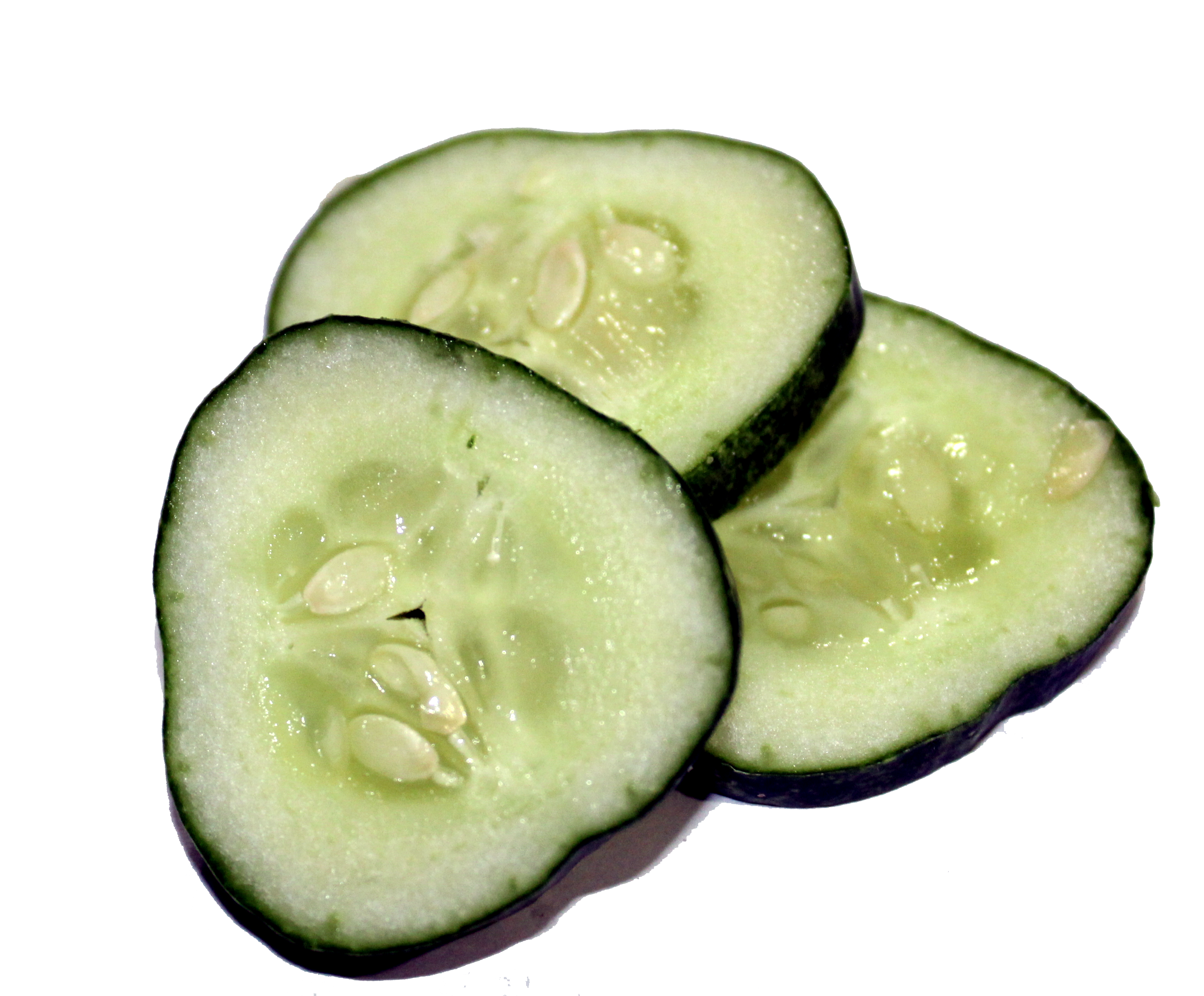
Cucumber is an all around good anti-inflammatory too. I’ve had both eczema and mild rosacea issues in the past and cucumber is one of the only things I’ve found that that can calm both without irritating my skin further. It’s also very hydrating and loaded with anti-oxidants. Cucumbers are packed with vitamin K, they also boast a fair amount of vitamins B and C (fight free radicals!) and contain trace minerals like copper, phosphorus, potassium and magnesium. Soothing was the primary characteristic I was going for here.
I made my own cucumber powder from the fruits I grew in the garden. For one thing, I grew WAY too many of them this year and I can only eat so many. I didn’t want to make pickles and the neighbors are inundated with my cucumber giveaways as well. Dried and powdered, I can fit 6-7 full size cucumbers in one little jar! Also, I know what has been on my plants (water) and that they haven’t been exposed to any chemicals, sprays or pesticides because I grew them.

Cucumbers

To these two plants I added a dose of pot marigold (calendula) which calms itching and organic tea tree oil, which is one of the best anti-microbial, anti-bacterial and anti-fungals I’ve used. Just a word of warning- tea tree is not good for your dog. Don’t use use it on canines please.

Since tea tree has such as strong scent and I can smell that cucumber through the entire house, I probably won’t be adding anything smelly to the mix just for scent. I debated adding some mint, but on angry skin, it might burn, so I skipped it.

This formula should work well for insect bites, stings, diaper rash, heat rash and basically any wound that could use a huge dose calming, reduction of swelling and needs to be kept germ-free. It’s 100% all natural, the plants are all organically grown and chemical free.

To purchase Belle of Dirt’s Cucumber Plantain Salve, visit Cordes Farm’s Etsy shop.

I’m growing some lemon balm and yarrow to maybe use for the next batch of something…

-Belle