Garden Tech

nw-app.jpg

Burpee has their own gardening app now. (I get their newsletter since that’s where we ordered our seeds from this year- btw. In retrospect, I should have waited for the Gurney’s catalog. There was a $50 off coupon if you spent $100 with them. I spent just over that on Burpee’s site. >.<)

Anyway, here’s the bit about the app, for those of you that garden AND have smartphones. Crazy!

Free mobile Web tool from Burpee teaches you about veggies

Burpee Home Gardens introduces the Burpee Garden Coach, a free app for gardeners who like to grow what they eat. Through text messages and Web-based interaction via mobile phone, you learn how to choose, grow, maintain, harvest and eat backyard-grown veggies. To get started, simply text your zip code to 80998.

Features of the Burpee Garden Coach include:
• Text messages throughout the gardening season provide planting date tips, maintenance reminders and support to improve vegetable gardening success.
• Access to the complete Burpee Home Gardens variety lineup at your fingertips.
• The ability to record, document and rate plants in a personalized garden journal.
• Get local weather forecasts to aid in garden maintenance.
• Harvesting ideas and inspirations from garden to table.
• Find Burpee Home Gardens plants at local garden centers.

Android Users

I-Phone Users
Search “Burpee Garden Time Planner”

PS. I didn’t write this. It was a news blurb linked to Burpee’s website. Just putting that out there so they don’t come back later and nag me for credit.

Gardeners, Start Your Seedlings!

My seed packets came in the mail today that I ordered a little less than two weeks ago; soon it will be time to get some of these plants started indoors.
Most seed companies like Burpee, Gurneys or Burgess are fairly first-time-gardener friendly in that they print planting and care instructions on every seed packet that they send out. You can often find additional information on their website for specific planting information in your growing zone  ( Link is to basic explanation, map to follow below). I live in North Central Missouri, most of which is in Zone 5b; however, the Lake Area is in a micro-climate area of Zone 6. This is according to the older maps; sometimes the newer maps show all but the northernmost part of Missouri in Zone 6. What this means in layman’s terms is that in Zone 6, my garden should be safe from a hard freeze by mid-May. tomatoseedlings
I was surprised at the amount of misinformation I found about seed starting on sites like Yahoo Answers. I followed the question, “When should I start my tomato seeds indoors if I live in Zone 6?” Several people, professing to be garden centers and/or professional gardeners advised this person NOT to start tomato plants indoors, but to wait until they could be planted directly in the garden instead. One of the responses actually read, “Don’t plant them indoors because they are incredibly likely to die. What you want to do is plant them outside in mid-May to early June when lots of sunlight is available.” Another answer advised them to wait until July! Seriously folks, that’s a bit ridiculous.
Yes. Tomato plants need a lot of light. If you aren’t lucky enough to have a big bay window with sunlight for 8-10 hours a day like I am, then you may need grow lights to supplement your seedlings. Without enough light, the plants will become leggy, which means the stalks will be spindly and they’ll fall over a lot. Tomato and pepper plants need about 8 weeks to germinate. Most seed companies will recommend you start them in sterile planting medium, like those pete flats you see in garden centers this time of year. Last year, I started mine in milk jugs, then transplanted to 16 oz. plastic water bottles with the tops cut off. I used ordinary potting soil. I put them on trays in the window and watered them whenever the top was dry to touch or when I could see that the soil looked dry partway down. The nice thing about clear plastic containers is you can actually SEE whether the soil needs water or not; another advantage is that you can see the root growth on your plants. They were the perfect size for giving a couple plants away to family also.
I also saw a suggestion on Pinterest to use toilet paper tubes stuffed with soil. The pin claimed that you could plant these directly in the garden since they are biodegradable. I haven’t personally tried this out yet, my concern with it is that that the tubes would start to fall apart before you were ready to transplant them and you’d have a mess. Maybe if you stuffed them close together in a shallow plastic crate (as they were shown in the pin photo) and were careful not to overwater…

This timetable for starting indoor seedlings will allow about 8 weeks for seeds to germinate and for your plants to reach a good transplant size before being moved to the garden.

Zones 9 & 10: Start seeds indoors in early to mid January
Zone 8: Start seeds indoors in early February
Zone 7: Start seeds indoors in mid February
Zone 6: Start seeds indoors in late February
Zone 5: Start seeds indoors in early March
Zones 1-4: Start seeds indoors in mid to late March

Tomato seedlings will emerge in about 7-10 days. Most peppers take longer, about 10-21 days. Some of my peppers took so long last year, I was beginning to worry that the seeds were duds and weren’t going to do anything. Then they took off and caught up to my tomatoes in a week. Onion sets should be started indoors now through mid-late February. You let these grow to about 5-6 inches tall, repeatedly cut the tops to about 3 inches until they are ready transplant; the cutting will help strengthen the root and health of the onions.

This map shows the hardiness zones and projected last frost dates for most of the United States.

FrostZones

Not all seeds should be started indoors and transplanted like tomatoes and peppers. Some should be direct-sowed in the garden; again check the labels on your seed packets for best planting times. Crops such as broccoli, most lettuces and greens, carrots and onions can be started in early spring in your garden, so long as the soil is workable. These plants benefit from the cool nights and are harvested before the warmest part of the summer season, they are early summer and late fall crops. I’m going to start half of my seeds in mid to late February and save the other half for August/September for a fall crop. Both lettuce and broccoli plants will bolt when the sun gets hot. Bolting means the plant is getting ready to flower; this often changes the flavor of the plant when it forms the flower stalk and makes it no longer edible. Some lettuce varieties are described as “Slow to bolt,” which means they will last longer in warm weather.  Most carrot varieties can also be planted early, when danger of heavy frost has passed.

For crops like cucumber and corn that are direct-sown, Zone 6 gardeners are probably safe to plant in early to mid-May. I started my cucumbers last year before we went on vacation, which was the week of May 8th. When we got back from our trip, I had plants!  🙂
Melons and squash can also be planted in Zone 6 in mid-late May through June. Beans and peas should be started in June/July when the soil temperature is warm. This is also when you should plant your heat tolerant herbs like sage, thyme, oregano and basil. If you stagger your bean plantings every couple of weeks through August, you can have beans well up until frost. This will also help spread out the yields, so you aren’t overwhelmed with tons of beans at once.

September plantings of garlic will be ready to harvest in the coming spring. Spinach is also a great plant for September that loves the cooler weather up until hard frost. This is of course, a very generalized overview. I’ll be posting some articles on specific plants and their care soon, along with some things I’ve tried that have worked out well. Even though it’s snowing today and the wind chill is around 10F, I’m still getting the gardening bug. I’ll post photos of my flats when they are started and in their sunny window.
-B

The Edible Garden

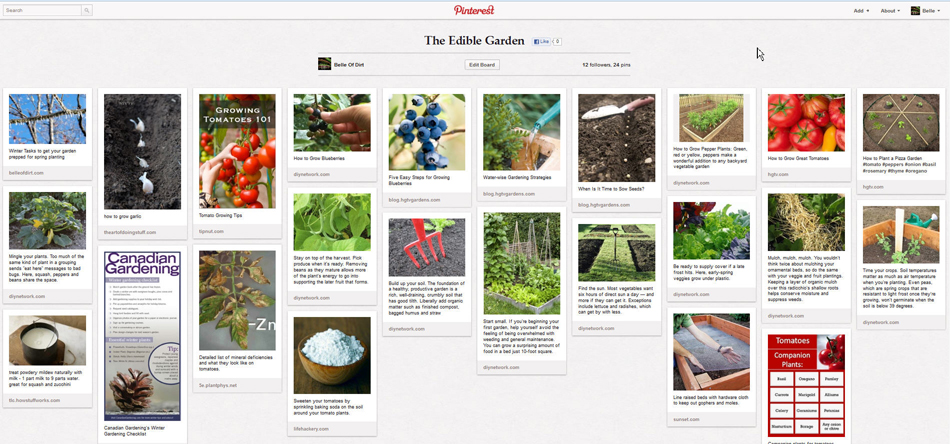
EdibleGardenI recently created a board for my Pinterest account titled “The Edible Garden.” On it, I intend to post articles and tips related to growing all things edible in your landscape, from garden veggies and herbs to fruit trees, bushes and nuts.

We’ve lived in our current house for almost 12 years now, but up until this past year I had never put in any sort of vegetable garden. I grew a couple tomato plants one year, that’s been it. I thought gardens were a pain in the butt. I expected constant maintenance; watering, picking, hoeing and pulling of weeds, fighting insects, the list of “why nots” in my head went on and on. I wanted landscape plants that came up year after year, were drought tolerant, deer and disease resistant and the only bugs they really attracted were bees or butterflies. I wanted flower beds that I didn’t have to maintain much, just run the edger along the landscaping every couple of weeks and call it good.

I changed my mind about planting edibles the year before last, when my daughter became a preschooler and took a keen interest in watching our 4 0r 5 strawberry plants each day for red berries. It wasn’t just a random walk by, “Oh! There’s a strawberry on that, I’ll pick it.” She made an EVENT out of going into the yard, just to check them each day. She even pulled the weeds growing around them and made sure the bugs didn’t get on them while she was watching. She’d yell in excitement and run inside to show me every. single. red berry found, before popping it into her mouth and raving over how wonderful that tiny, single berry was. Then our dog dug up all the strawberry plants. Every last one. My daughter was devastated. I managed to salvage two of them by putting them in pots (outside the fence where they were safe from doggie paws this time), but they didn’t grow but a couple strawberries the rest of the season after the shock of being dug up.

Later, we were picking out salad stuff and tomatoes in the produce section at our store when she mentioned that the entire area looked like a big garden. I told her that most of that stuff could be grown in a garden- Ok, all of it. But I have no idea how to plant Jicama or even what it tastes like- she asked me if we could start our own garden and grow our own vegetables, especially strawberries. That year, we put in two kinds of pepper plants, roma and cherry tomatoes, cucumbers and strawberries. She was as diligent and enthusiastic about checking all those plants each day as she had been checking our few yard strawberries. The garden was an endless teaching tool, about how plants need a certain combination of soil, light and air to grow. I taught her responsibility, it taught her to take care of living things and we had fresh produce to snack on when out in the yard the entire summer until frost.

Garden2012

Last Year’s Garden 2012

This fall, I cleared out the ENTIRE flower bed along the side of our house; we’re reserving all of that space for edible garden. My plan is to fill that one huge bed with enough veggies and herbs that we’ll slash our produce bill in half this summer. Next year, I plan to add some more fruits (besides strawberries) and maybe even some nut trees. We are going to be busy all spring, planting, supporting and reporting- to those few of you that read this blog. I’ve ordered $100 worth of seed and plan to build a couple more raised beds; we may have enough produce to feed several families!

My daughter’s enthusiasm was my primary motivator for building and expanding our garden, yet I found that last year it was wonderful to walk out to our little garden, pick a few peppers and use them for our dinner. The flavor of anything we grew was unmatched by produce I’ve bought in any grocery store. They don’t keep as long, but if we were careful to leave things on the vine until we needed them, that seemed to resolve some of the waste. I don’t take a lot of stock in the organic versus non-organic produce argument. That being said, there’s no doubt that avoiding some of those pesticides (which I don’t use unless it’s an emergency- as in blister beetle invasion) and wax will be a good thing. My parenting magazines all rave that avoiding pesticides on produce is the best thing for little developing brains. They praise organic produce for minimizing this pesticide exposure. There was even a list, which one titled, the “Dirty Dozen: 12 foods with the most pesticide residue of special concern” in this February’s issue. The offenders on this list were: strawberries, apples, celery, sweet bell peppers, peaches, nectarines, grapes, spinach, lettuce, cucumbers, domestic blueberries, potatoes, green beans and kale. Most of the above, my family eats on a regular basis. Several of the above listed, we’ll be growing in our own garden this year, so I know exactly how they will be handled and exactly what will be used to care for them before my little one puts them on her plate. We’re even trying some of the new corn this year, that’s supposedly bred just for containers. Corn prices last year were outrageous with the Midwest drought and most of what I saw in the store didn’t look fit to eat anyway. Canned corn is loaded with salt, frozen is loaded with sugar. Avoid all that and grow your own.

So that’s how I went from planting butterfly bush and the occasional marigolds to an entire produce section in my front yard. If this year proves as successful as last, I’ll continue to expand with new plants and more space each year. Do you have a home garden? What are you planting this year?

Winter Gardening

I prefer winter and fall, when you feel the bone structure of the landscape- the loneliness of it, the dead feeling of winter. Something waits beneath it, the whole story doesn’t show. – Andrew Wyeth

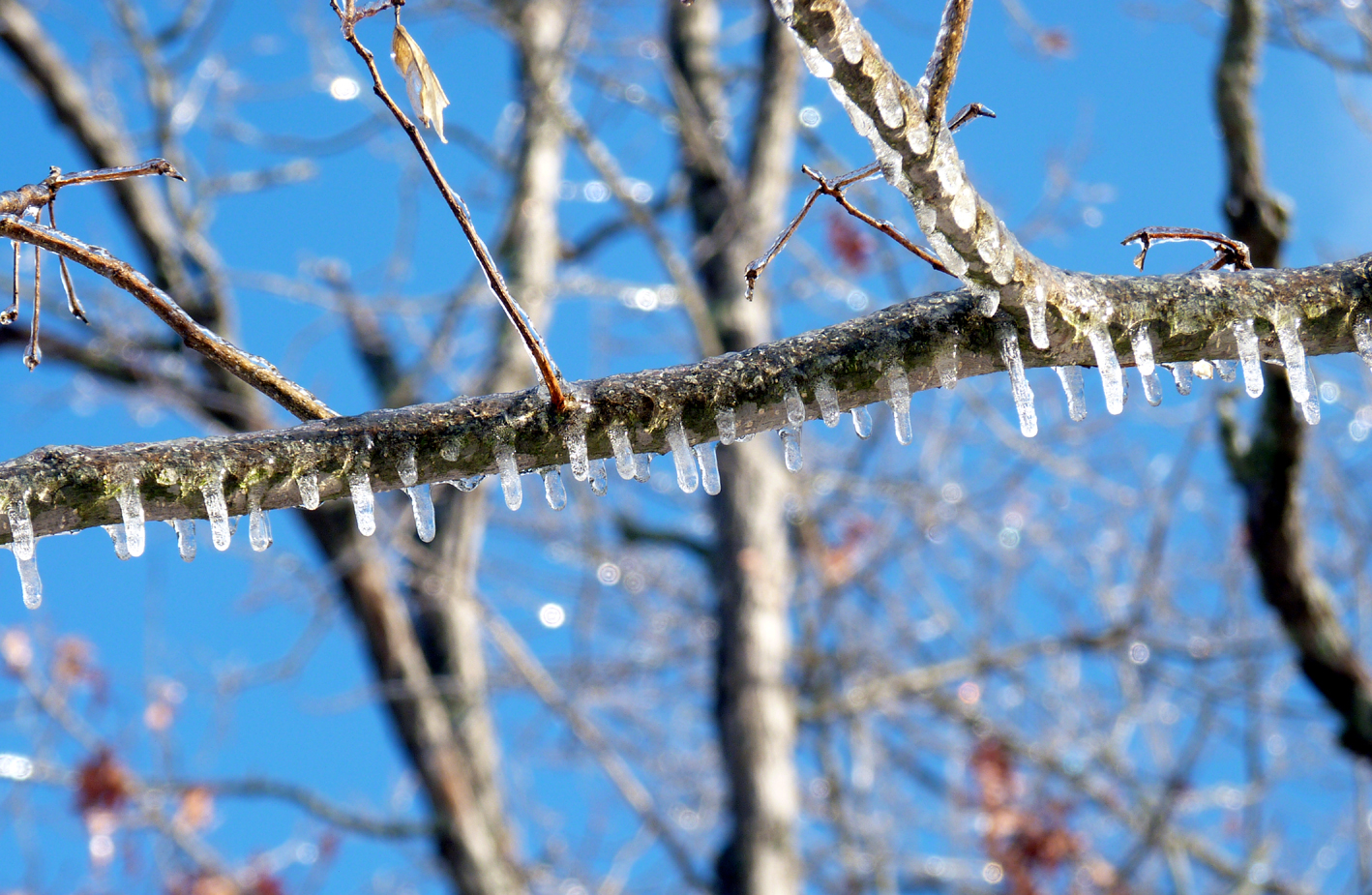
IcyTreesWait a minute… winter gardening? What is there to do besides read gardening books and wait for spring to arrive? Unless you’re hibernating with the bears, there’s plenty you can do during the winter months to get you ready for spring planting.

Like the above quote suggests, winter is an excellent time to really take a look at the bone structure of your garden. Like the bones in a face, your garden’s foundation will show through, support and give shape to everything layered on top of it. Architectural elements support the greenery, flowers and fruits of spring and summer.

Moderate winter days are a great time to walk about your yard and consider your  landscape  plan for the coming year. Is a too large plant overwhelming a small space? Does a certain spot lack interest, need repairs or maybe additional WinterBonessupport?
Now is the time to plan and take care of it, before the area is covered in vigorous growth and becomes an issue in the middle of your busy growing season.

If you’re hiring a  landscaper this year; schedules tend to be less chaotic during the winter months and you can set up your installs for early spring, before the rush begins.

If you haven’t already; clean and sharpen your garden tools, clear out junk in the shed, pick up extra gloves and start browsing those seed catalogs. When I can’t get outside during icy or especially cold spells, I love to shop and plan for what I’ll be doing when it does warm up a bit. Seeds may arrive as soon as early February for starting indoors- 8 weeks or so before the last frost. Order early so you can avoid delays and get the best selection!

I like to prune and clean out brushy areas on mild winter days. It’s much easier to see the underlying structure of a tree without leaves blocking half your view. Also, pruning during the cold months helps protect trees from contracting some fungal diseases and pest issues that are prevalent during the wet spring or hot summer months.  Our red-oaks are prone to oak wilt in this area- the disease is dormant in below freezing temperatures and MUCH  less likely to be passed from tree to tree through infected wood or cause stress to a tree susceptible to infection.

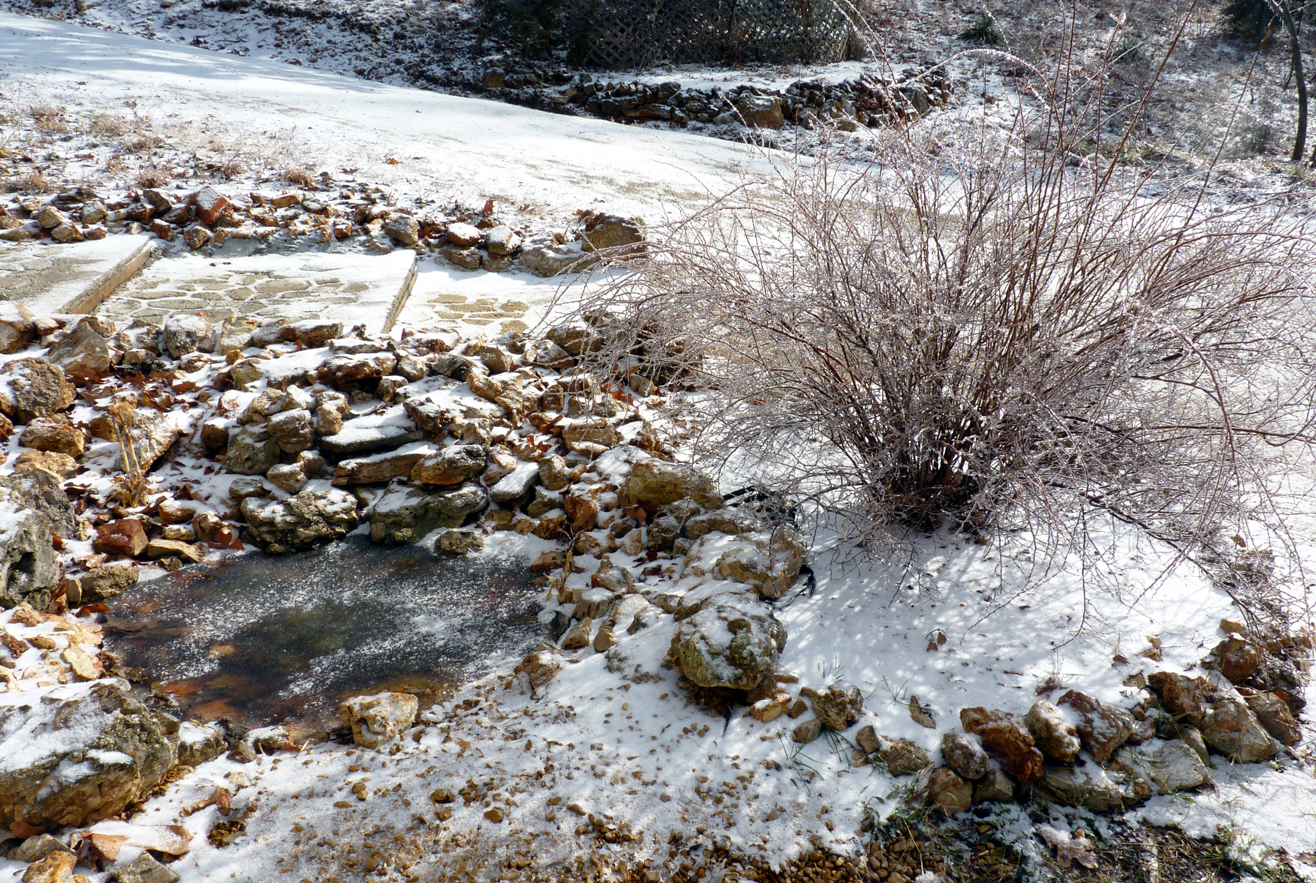
icedberryIf the plant flowers in spring, wait until after it finishes blooming to prune. Vigorous winter pruning of a spring blooming plant means it won’t bloom again until next spring; already, there are small, tight buds forming on several of my blooming shrubs and trees. The early bloomers, like forsythia, burning bush, saucer magnolia (a cold-hearty cousin to the trees in the South) and wisteria shouldn’t be pruned or cut back until they finish flowering in mid to late spring. Pruning may be especially necessary to trees following ice storms or heavy snows, due to broken branches.

Make a date with your soil. If you’ve never had a soil analysis done, the tests are relatively inexpensive and getting results now will give you plenty of time to learn about what amendments to add when the soil becomes workable in spring. County extension offices should be able to direct you to soil testing labs; some may even provide free testing.

Spring clean your window space as soon as those holiday displays are stored away. Growing seedlings need ample light, and warmth to be ready for spring planting. Make room for this temporary garden space before your seeds and sets arrive.icicles

You can still amend garden beds for spring, if you didn’t do it in the fall. I’ve been adding cardboard to various areas of my yard and garden since December. Don’t work the soil if it’s frozen or too wet, you can damage the structure. What you can do is add coffee grounds, tea grounds, egg shells, cardboard and leaves until the compost pile begins to warm and the soil isn’t frozen solid. This will give you a jump start on enriching the nitrogen and calcium in your beds as well as helping to warm the soil faster when the snow and ice finally exit stage left.

I’ve also read that a thick layer of cardboard in the fall/winter months can all but eliminate the need to till or weed a garden plot before planting in spring. I covered our beds in late fall with a layer of cardboard and black weed barrier that I could easily remove when I’m ready to start moving seedlings outside. This is my first year trial, so I can’t vouch yet personally for its success. I’ll be sure to post comments or updates this spring when I find out.

Happy planning folks, don’t forget to oil up those shotguns in case Mister Groundhog sees his shadow next week! 😛
-Belle

Green Onion Resprout

Found this on Pinterest and decided to try it out for myself :

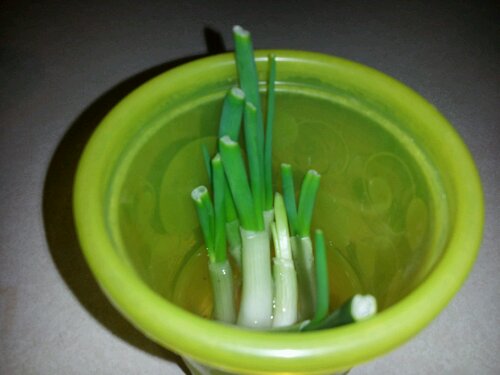
Next time you buy green onions from the store, don’t throw the root bulb portions away. Save the bottom bit of the onions and put them in a cup of water on the windowsill.

The onions will grow new plant stems from the root bulb. The post swears you can do this repeatedly, I have a feeling that the bulb will eventually use up its energy stores and your onions will become weak and thready over time… but we’ll see.

This is about a week’s growth from my first cutting. So it really does work. I’ll repeat the process after a second cutting and see if the plants do as well. I just change the water every couple days to keep it fresh and clean.

image

Try it and see! I might use more green onion if it was readily available like this.

-Belle

Busy Little Bee

Tell me what you’ve been up to… busy little bee.
I will always and forever associate that line with Gladiator, which is why it still gives me the creeps when I hear it. So the growing season is over, I’ve put away my mower and collected the milk jugs from around all the trees. (I’m sure the neighbors were relived at that one) I’m far from doing a whole lot of nothing though.
Winter and fall are my moving, planting (yes! planting) and cleaning up seasons in the yard and garden. It’s a great time to do planning when everything is stripped down to the bare bones and you can really visualize what works and what doesn’t. I do my pruning and lot of planting this time of year too, so long as the ground isn’t frozen, trees, shrubs and even some bulbs can be planted this time of year.
I’ve been burning brush, raking leaves, prepping the garden and moving lilies this past month. I’ve taken pictures of a couple projects to share soon. I just need a spare moment to sit down and write! No new photos of yard or projects today, but  if you’re curious about the face behind the blog, I did update “The Dirt on Dirt” with a picture of myself. 😉

Hades would like his weather back.

In regards to garden and yard projects, I’ve not been especially inspired this summer. It’s been a depressing season. It seems I’ve either spent the past months watching plants wilt, wither and die in the extreme heat and drought, or dedicated hours a day to watering mulching and looking for shade. While doing the latter, I always wondered if we would become one of those news headlines:Midwest Wells Running Dry”.

This spring, before the weather pattern shifted to Sahara Desert for most of the Midwest, I had planted 75 trees in various places around our property. New trees need mulch and regular watering for at least the first year of their life under ideal circumstances. When the weather pattern here got stuck on 7th level of Hell, I realized I was going to have a fight on my hands if any of my new trees were going to survive.

I started by reading up on water conservation and a technique called Xeriscaping.
Xeriscaping is simply this, creating a landscape that is mostly self-sustaining with little to no supplemental water. To some, this means filling the landscape with nothing but cactus and rock. In some areas of the country, I guess growing anything outside of a pot isn’t an option. Here in Missouri however, extreme hot and dry conditions are not our normal- even though this summer most of us saw nothing but.

The National Weather Service Climate Prediction Center reported that the drought covered over 60 percent of 48 states as of mid-August. In Missouri we fell under the two worst drought categories, extreme and exceptional. As of the end of August, my part of the country was down 11.78 inches of rain for the year 2012, with the current drought conditions predicted to last through the end of October.

Crop and pasture destruction have been horrible. Many farms forced to re-drill or deepen existing wells in order to get water to their land and livestock. Many mornings while out watering my little trees, I wondered what our neighbor across the street was doing to the water table I feared we might share. They have several head of cattle that they have to provide water for, a huge pool in their backyard and one of those awful, inefficient impact sprinklers running on their yard almost constantly. I envied them their green grass, while I watched mine turn brown, then disappear altogether, leaving behind little more than dust. Since our house sits down in sort of a valley, my only hope was that it meant my well was that much deeper into the water table and that it might hold out longer under extreme conditions.

One of the tenants of Xeriscaping is that you don’t try to maintain large areas of grass lawn and that if you do have grass; it is a type that is drought resistant and tolerates heat well. Our daughter’s play yard was the only area of grass that managed to stay green all summer. It’s also the only part of our yard where my husband and I painstakingly drilled small holes every few inches to plant the entire lawn with Zoysia grass plugs a couple years ago.
I first read about Zoysia in a Birds and Blooms magazine. I did a little research and ordered 200 plugs from an online farm. Prior to the Zoysia plugs taking hold in our yard, there was little growing there besides an excellent crop of crab grass each season. I had plowed it under and planted grass seed twice. It never seemed to take off in our rocky clay soil.
The Zoysia didn’t do much the first year, but the next year our plugs had filled in most of the yard with a thick mat of fine textured grass. Some varieties of Zoysia will survive winters as far north as Chicago.
The grass originated from Southeast Asia, China and Japan. It is low growing (means less mowing), establishes roots by rhizomes (creeping), is heat resistant, drought resistant and forms a tight covering that can choke out most weeds. I watered our lawn only twice all summer.
The drought also meant that I only had to mow it once after the end of May. It is still green, still healthy and fared much better than some of the bedding plants around the edge of the lawn. Zoysia is an absolute pain in the butt to plant, but now that it’s established and I see how well it performs under the worst of conditions, every plug we planted is worth the trouble.
It does turn yellow as soon as the weather cools down and stays that way until late spring, but when everyone else has a dead, brown lawn in August, ours is still green. If you must have a lawn area for kids or dogs, but would still like to follow the principles of Xeriscaping, warm season grasses like Zoysia or Bermuda grass are a great option.
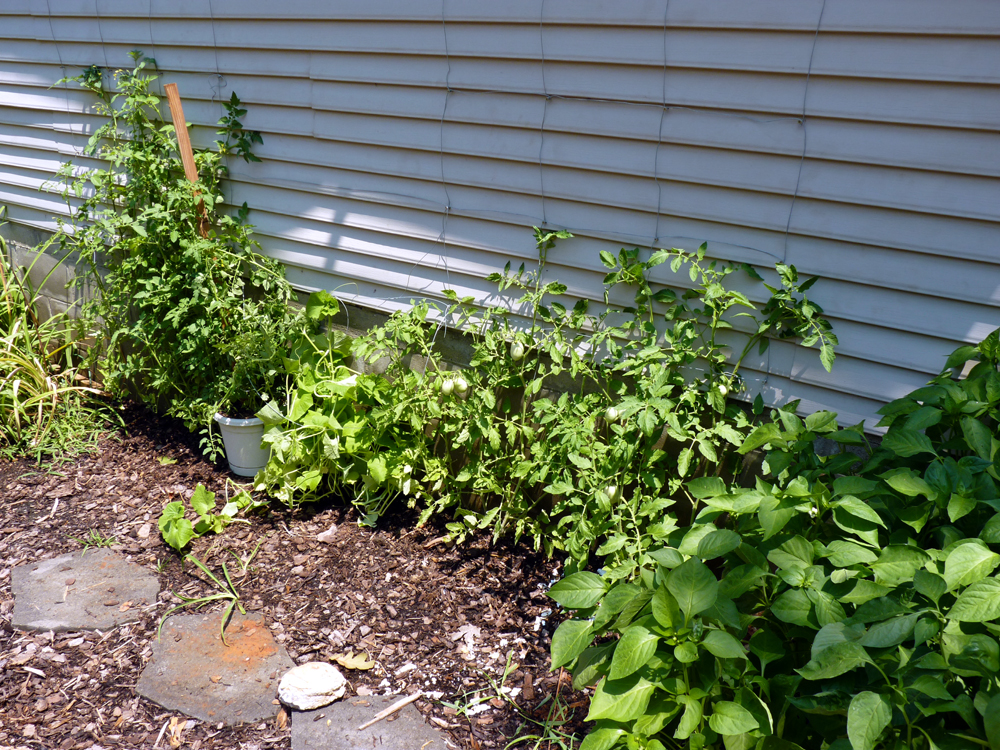
Luckily, I had limited the size of our vegetable garden this year to a few square feet by growing the plants vertically on trellis against the side of our house. I had done this more as an experiment than anything, however it turns out that this is another principle of Xeriscaping. Limiting the spread of your plants or growing vertically means you have to water a much smaller area to maintain the health of the plants.
I used lots of mulch over cardboard or newspaper to keep down weeds and set a misting sprinkler on a timer for every 12 hours. During the stretches of really hot days (4-5 days in a row or more of temperatures over 102F), I changed the timer to every 8 hours and ran it for 10 minutes.
I also put our bird bath right in the garden area, so that it filled up when the sprinkler ran. Our garden is right next to the pond I built this spring, so that pond caught any excess spray that didn’t land in the garden. Even though I can’t take credit for planning it out that way, this turned out to be a very efficient method of maintaining several things that needed water without a lot of waste.

Another bonus during the drought was my tendency to choose native plants in my landscape whenever possible. Again, I can’t take credit for guarding against drought, since I chose most of my plants based on the fact that they grow in clay soils with a minimum of additives to alter the soil composition, but it turns out that this is a Xeriscaping technique as well.
Xeros is Greek for dry; the idea behind Xeriscaping is to use as little supplemental water as possible in your landscape. Native plants are already adapted to your area’s climate and soil conditions, so they naturally need less care and maintenance to survive.
For annuals I often plant seeds I save from wildflowers like purple coneflower, thistle, daisies and sunflowers. Sometimes I buy flats of zinnias, marigolds and dusty miller to fill planting beds in spring. I tend to focus on perennials I don’t have to plant every year.
My butterfly bush did very well with almost no watering in spite of the heat. Ditto for the tiger lilies, Chinese wisteria, crêpe myrtle, climbing roses, spiderwort, yucca and saucer magnolia trees (Most of those aren’t native of course, but I had read that they do well in my particular climate and soil type)
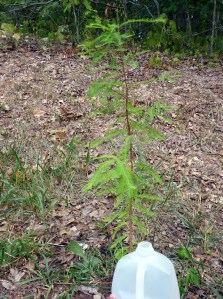
The new little trees were all heavily mulched when I planted them this spring and that seemed to serve them well the first month of the drought. After a month of drought and triple digit temperatures, I started losing some of the spruce trees I’d planted.
To still regulate my watering and assure that when I did water it went to the roots of the trees and not all over the surrounding landscape, I started saving gallon milk jugs. These I poked a few holes in the bottom, filled the jug partway with rocks, then sat them right next to the baby trees. I still had to water as frequently as every other day, but the water waste was greatly minimized by this method and it was a lot less time consuming too! I cut my time spent watering down from a couple hours to less than half an hour.

I also saved the large 3 gallon jugs from cat litter and 3-5 gallon paint buckets. The buckets work especially well for larger trees. I have a single mimosa I planted when we first moved here that I couldn’t stand to lose, I used one of the larger buckets to water it this summer. My daughter found a bucket that had a huge crack across the bottom; I was about to throw this away when I decided to try adding some dirt in with the gravel to make mud in the bottom. It worked like a charm for slowing the water down as it trickled out.
If you try the jug method, you may need to play with the amount of holes, whether or not you add mud or leave the cap on or off the jug- this will alter the speed which the water runs out. Slow is often better if you have clay soil, since it takes much longer to penetrate deep enough to reach a tree’s roots.

I also noted that my new trees planted under a canopy of shade tolerated the heat better than those in full sun exposure most of the day. Of course, this is because the larger trees shield their roots from drying out as fast. It also means the tree doesn’t have to consume as much water to maintain its top half if it’s not in sun.

Xeriscaping experts advise planting your garden or flower beds in the rainy season (for us this would have been any time before Mid-May, when Mother Nature turned any and all precipitation to “OFF”); this way the plants can get themselves established in your landscape before they have to start conserving water. The deeper and more widespread their root system, the more likely they will be to survive drought. Ever tried to dig up an established Yucca? Never put one in your yard unless you’re absolutely positive that’s where you want it. My small trees planted at least 2 years ago weathered the drought fine, even with minimal to no supplemental watering.

In areas where you have lots of gravel, concrete or pavement, it may help to place large potted plants around the perimeter for both shade and to cut down on the heat to the surrounding yard.
I have no love for our vinyl siding and grow my roses, tomatoes, cucumbers and ivy right up the side of our house. It keeps the heat down on the house, especially between 2pm and 5pm when the sun is blasting the southwest corner. I would plant trees on that side, but we have the unfortunate circumstance of living in an area where satellite and wireless are the only decent options for internet and TV.
Large trees on that side of my house would block the signals, hence the vining plants instead. The sprinkler for the garden does double duty here as well; while the garden, birdbath and pond are being watered, the hottest part of the house is being sprayed down in the early evening.

Xeriscapes don’t have to be labor intensive, but they do require some careful planning and initial set-up. You can save costs by harvesting seed from each year’s annuals to use the following year and with a little patience- perennial plants don’t offer the instant gratification of annual blooms, but they return year after year and often multiply over time. Xeriscapes and native plants have better disease resistance than large grass lawns, are less prone to being destroyed by pests or fungus and attract butterflies, bees and birds.

With a little careful planning of my own and a willingness to let go of some of my higher maintenance plantings; I’m hoping next to year to implement more Xeriscaping techniques and have a little less stress when a big, fat high pressure area blocks our rain for months at a time.

And please share if you have other tips and tricks about water conservation or native plantings!
-Belle

Blister Beetle Battle

My daughter and I have been SO proud of our cherry tomato plants that we grew from seed this spring; we nursed them in sunny windows until they were fledgling plants big enough for the garden. All through the past couple months we have mulched, fed and watered them, excited and accomplished when the first blossoms emerged, turned to green fruits and then to red. We look forward each day to going out in the yard and picking our little cherries.

Blister beetle noshing a leaf

I first spotted a couple of beetles yesterday morning while watering. Since there were only two, I hand-picked them off the plants and squashed them under a boot, then went about my business. Where the beetles had been eating, there were some black flaky looking bits of stuff, but they sprayed off easily with the garden hose.

Next afternoon, we were out working on building our new deck and I checked our plants for ready tomatoes as usual. I was horrified to discover that our plants were now COVERED in striped beetles, noshing away on the leaves until they looked like lace. They’d started from the bottom and made rapid work towards the top, leaving little but green fruits and stems.
I panicked.

In spite of years growing ornamentals, countless trees, shrubs and flowers, this is my first year with a vegetable garden. In the past, I liberally used chemical fertilizers, weed controls and pesticides in my yard to control whatever ailment my plants suffered, whether fungus, insect damage or other. One season I lost over half the plants I’d worked so diligently to grow for two years from a Weed and Feed fertilizer that I either applied too liberally or the chemical was simply too harsh for what I was trying to grow.

Until this week, when faced with a blister beetle battle, my chemical use had been almost non-existent for several years. Compost and lawn clippings, kitchen scraps, manure and leaves were my fertilizers. The pond next to the garden attracted frogs and birds to help prevent pests on the ornamentals. Recycled milk and cat litter jugs served as slow-watering systems, rather than buying many feet of soaker hose or sprinklers.
There was a bag of Sevin dust sitting in the back of the cabinet; had been there for at least 5 years or so, unopened. Faced with all that cherry tomato destruction (I swear I could HEAR them chomping away), I ran in, grabbed the Sevin dust and threw liberal handfuls all over the plants. I watched with great satisfaction as those chewing little buggers began dropping off, writhing and squirming. I hoped in vengeance of my plants that they were suffering greatly.

It occurred to me following this rash dumping of handfuls of poisonous dust all over my garden that I had done just that; next to the frog pond and all over the food we intended to eat. I decided I’d try to minimize the spread of the poison to the pond water and hosed everything down liberally the next morning until the water ran clear into the yard. I’m hoping it didn’t leach much into the pond water and won’t hurt my frogs in the long run. We’ll be carefully washing anything we eat off of those plants for a while. L

Beetle Blisters

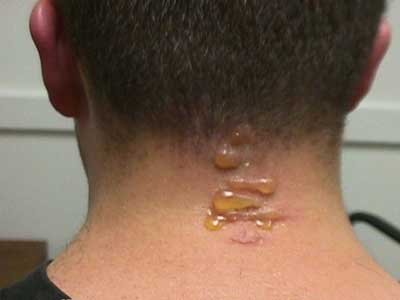
The articles on the internet about these beetles did little, if anything to make me feel better about their being in my garden, after seeing pictures of the damage they could cause to both plant and human skin. The Striped Blister Beetle produces a substance called cantharadin that causes horrible blisters on skin; it is also toxic to animals. An article from Texas A & M Entomology claimed that a horse could be killed by ingesting only 2 or more of the beetles, even if the beetles were dead.  Farmers have had trouble with attacks on their alfalfa crops and the beetles in turn, winding up in livestock feed.

The beetles look very similar to a lightning bug; they are about the same size and shape, but with very distinctive stripe patterns on their backs. They lay their eggs in cells just beneath the soil surface. Adult beetles eat foliage and fruit, while the larvae are said to feed on grasshopper eggs. (This was the ONLY beneficial fact I could find about them)

Several blogs and forums I read stated that people had minimal success with hand picking (be sure to wear gloves!) and dropping them into a container of soapy water. Most complained that there were SO MANY by the time they noticed them that this was impossible without using a vacuum cleaner to do the job.
A couple people mentioned a homemade spray made up of organic dish soap, canola oil, 2 cloves of garlic and red pepper flakes strained into a tea as an was effective method of getting rid of them. They did mention that this spray, while safe on vegetables (wash before eating of course) for human consumption, seemed to kill beneficial pollinators such as bees and butterflies as well. Some suggested protecting plants with mosquito netting. This of course only works if you get to the plants before they are infested with the little monsters.

I can say from my own experience that the Sevin dust worked to kill them beautifully, but there’s no telling what else it killed before I washed it off. There were quite a few dead daddy long legs hanging off the plants when I rinsed them the next morning. If I happen to get unlucky with another visiting swarm, I’ll head to the grocery store and try some of the organic spray I mentioned above instead.

Any of you had to fight the blister beetle battle? What did you use to get the little buggers to move on?

Disney Gardening

I was recently lucky enough to spend a week at Disney World; we went to Magic Kingdom and Disney’s Animal Kingdom. These people know how to garden! Granted, it ‘s in Florida and it rains practically every day there AND they are working with Zone 8-10 temperatures. Still, I was impressed with their attention to detail and all those little extras they impart into an area to give it a specific feel. One of my favorites was the Asia section of Animal Kingdom. I’ve always wanted to add a few Asian elements to my own garden, but until now haven’t had a clear idea of what to do or even where to begin. The Asian look is definitely more that just bamboo and Japanese maple trees. I picked up plenty of interesting ideas on our trek through the Disney parks and took some great photos. Thought I would share a few of them here.

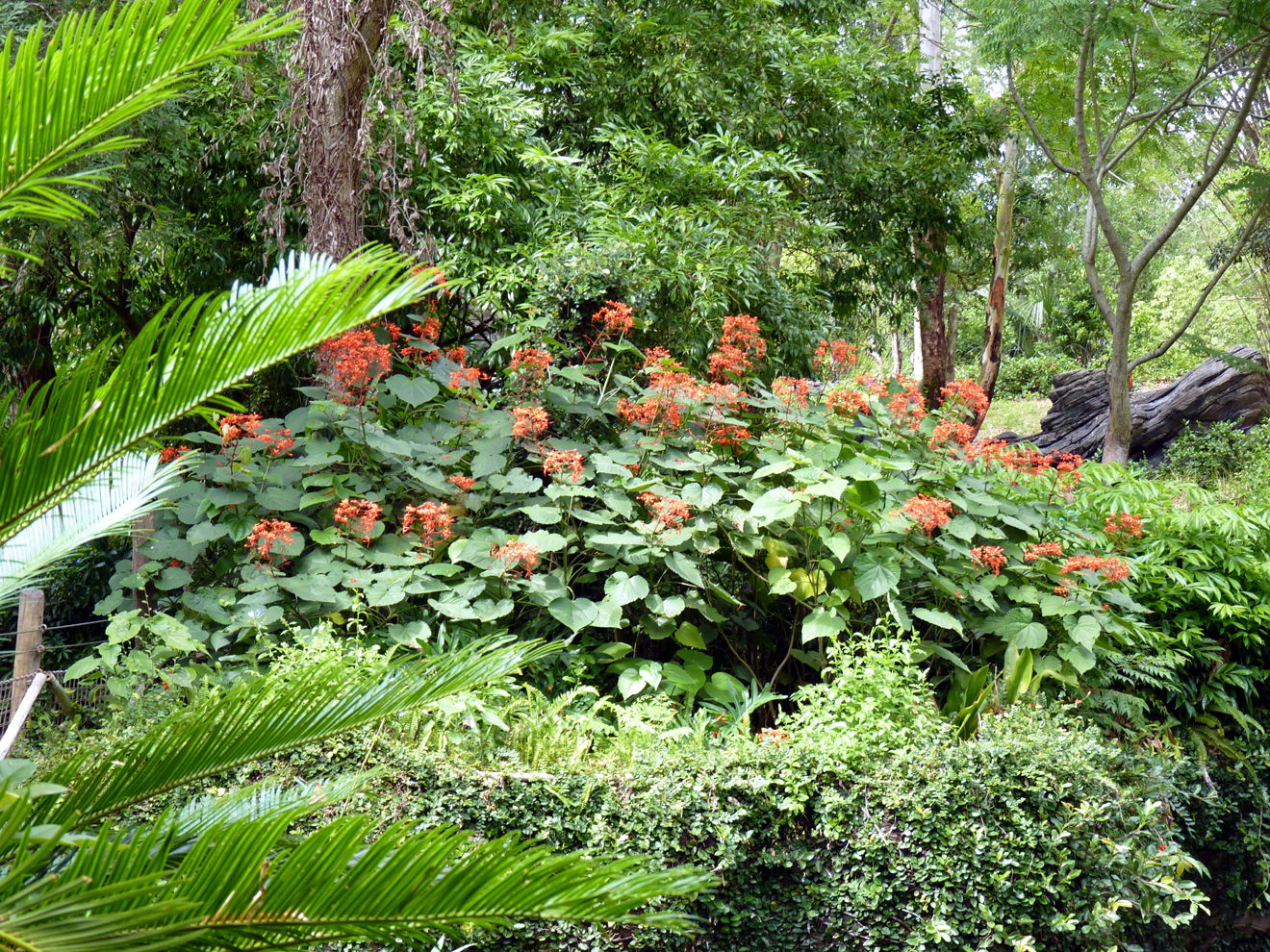
One of the many flower beds throughout the Animal Kingdom park. I loved the use of color and different leaf textures in this one.

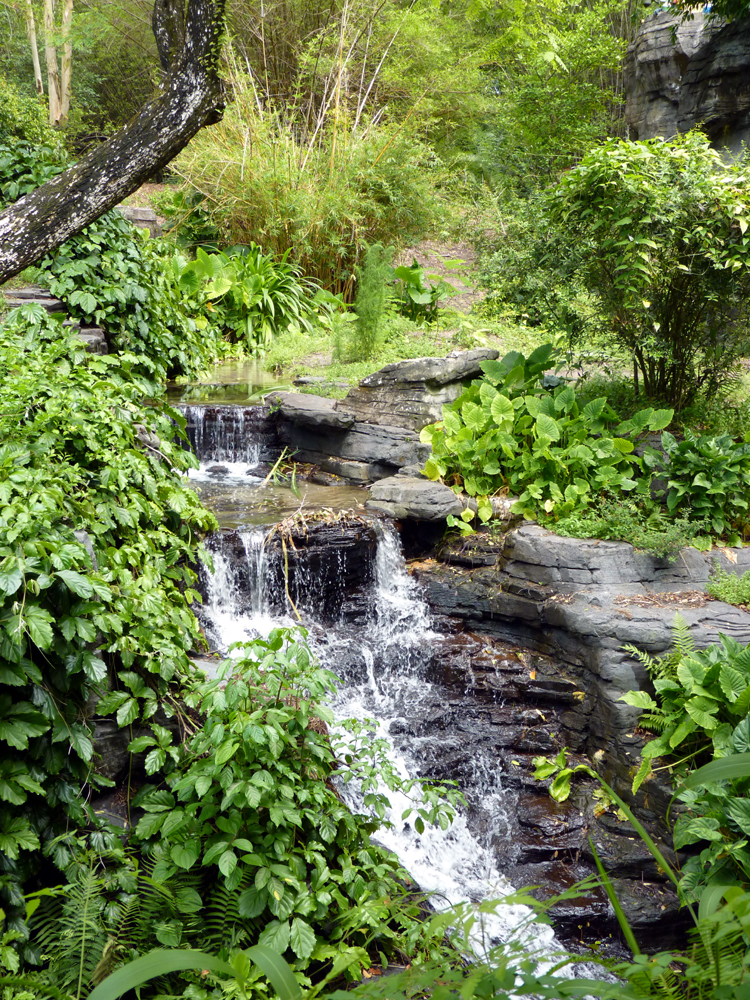
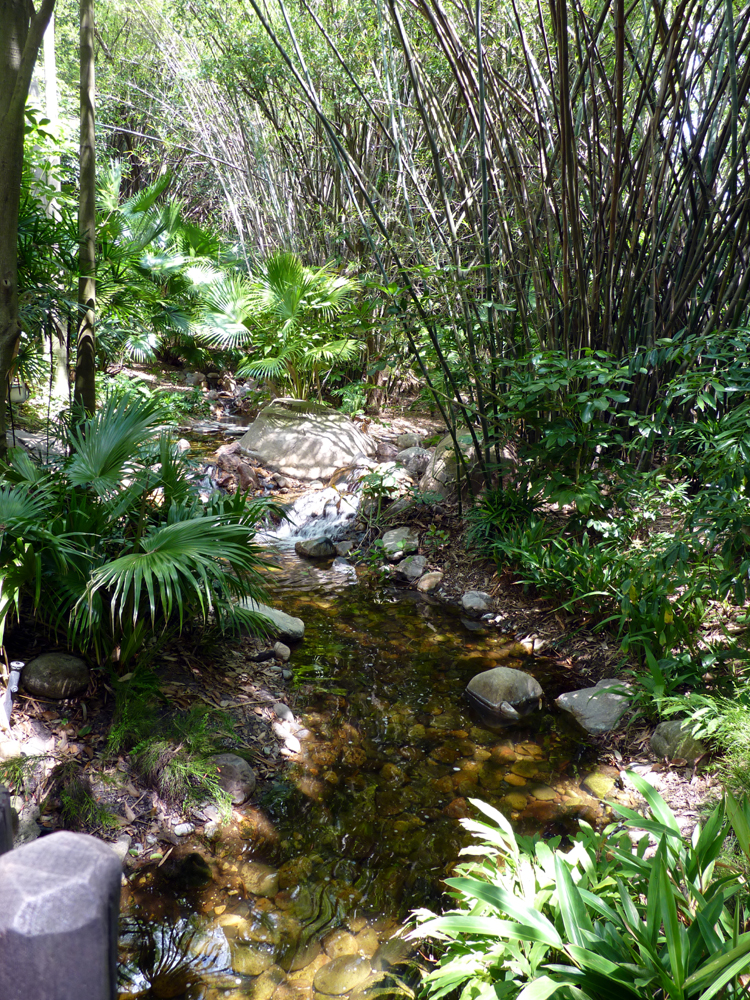
One of many man-made streams throughout the park. This one looks like molded concrete and stone to give it that very natural look of large boulders and cliff drops without actually importing all that rock. Love the plant placement and the fall of the water. 🙂

This is part of a man-made savannah on the Safari Tour ride. (Not in Asia section, but Africa) There were no fences in site anywhere. They used natural barriers like water-filled pits to keep the predator/prey animals apart.

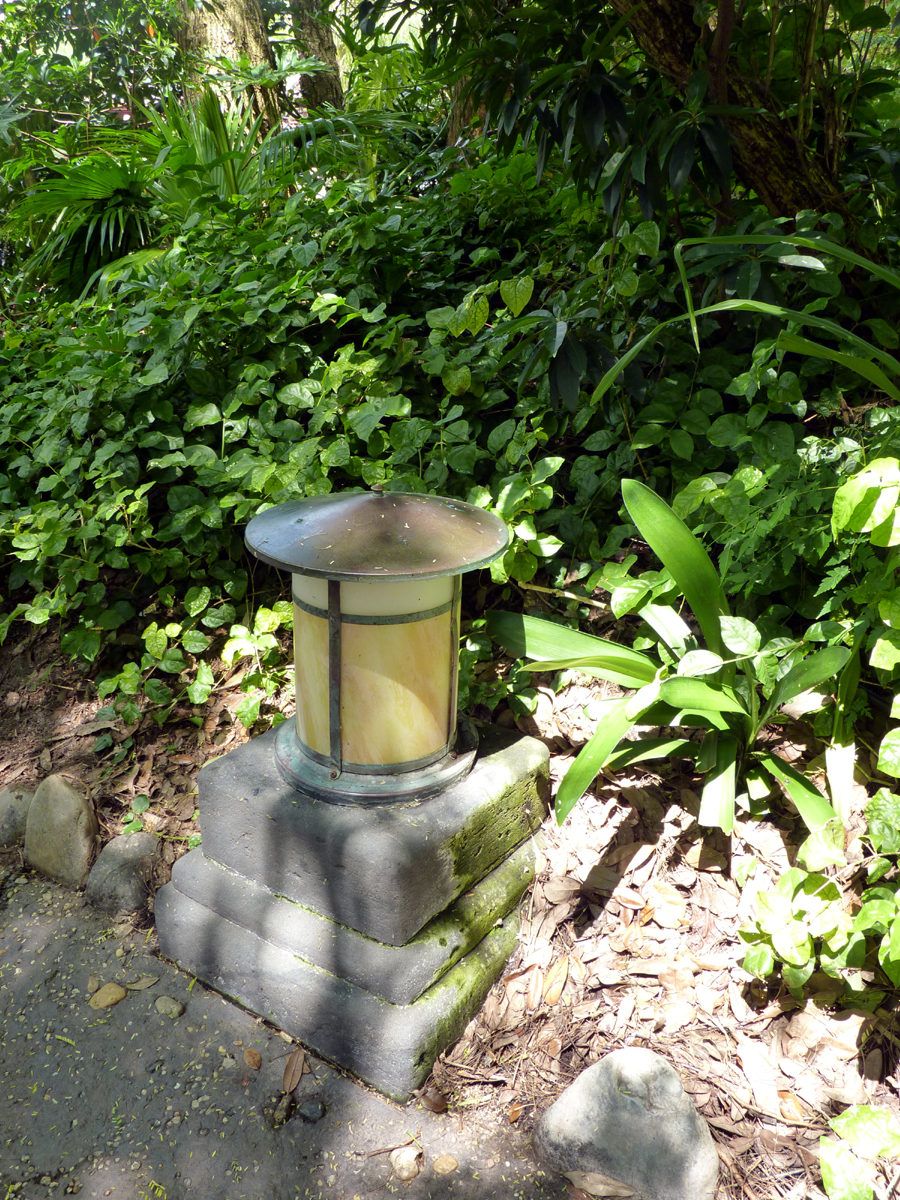
One of the lamps lining the sidewalks throughout the Asia section of the park. I’m actually considering trying to make a couple of these. Maybe a trip to the hardware store for some flexible plastic and chimney caps?

Another stream bed view. I took this one for their use of plant placement; the midsize plantings at the bends in the stream and the tall stand of bamboo as a backdrop.

Rag scraps tied to the branches of a tree. This one I think you’d have to be careful duplicating, or you’d just wind up looking like the weirdo that covers a tree in rag scraps. But if you had the rest of the look in your garden and then added one of these, I think you could pull it off. Loved the movement and color of this in the park, was a major eye-catcher!

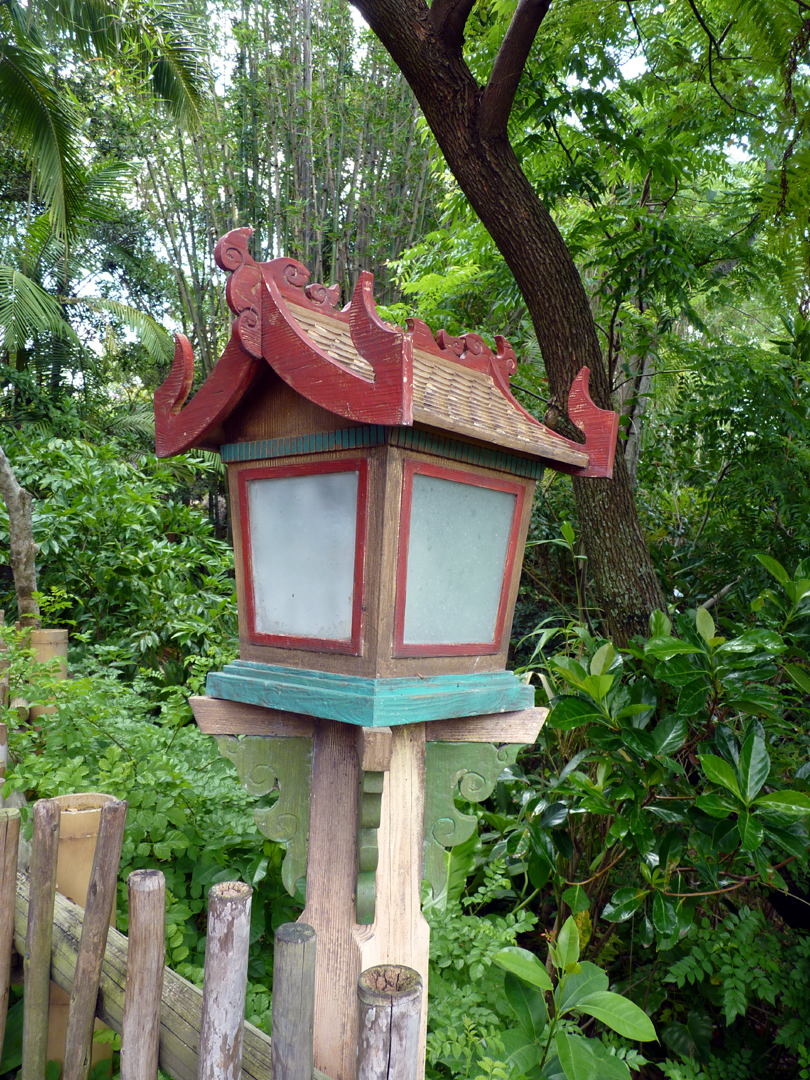
Another Asian-inspired lamp. Would be a bit harder to make, but I thought with a router to cut the scrolled wood, it could still be a cool little project. If hollow pipe was used to make the posts, you could wire the light so no wires would show. (I don’t think this one actually lights up)

I’ll post an addendum to this if I actually manage to implement some of these ideas instead of just sharing and thinking about them. If you should try them out, I’d love you to share your photos!
Till later gators,  –==<
Belle