Life is what happens when you’re making other plans

And if you found yourself singing John Lennon just now, you may be telling your age like I am. 🙂
So, what the above means for those of you that aren’t Beatles fans, is that I’ve hit a bit of a snag in my long term plan recently. This also means I have to focus on some other projects that are non-yard or garden related for a while. I’ll still try to post all I can and get some of my already planned posts up here, but I’ll probably be spending most of my time wrapping up projects, rather than starting new ones. I’m still working on stuff and getting out in the dirt, just not in my preferred way. Rather than putting 75 trees into the ground this spring, I’ll be cleaning up old messes around the house, doing some construction and remodeling projects- stuff like that. I spent the weekend clearing out the pile of scrap lumber behind our house, rebuilding the little bridge back there and tearing apart our old benches, since the lumber had mostly rotted away.
Today I removed our bathroom sink, took the formica countertop off and started taping and mudding the new drywall in the master bath room. I am a VERY busy Belle right now. The upside to all of this is that I’m going to be in fabulous shape by the end of summer if I keep working like this. The downside is that I may not have as much time to write and dedicate to plant life as I would like. But this too shall pass and as soon as I get the necessary projects squared away, I’ll be back to planting and gardening with a vengeance.
FYI, if you need to remove Formica from a countertop without destroying the countertop, a household clothes iron works absolute WONDERS. I set it on the counter for a bit to warm up the glue and used a metal drywall knife and hammer to lift it right off.
-B

Forsythia

Forsythia BushThe bright yellow cascades of bell-shaped flowers on my forsythia bush join daffodils, hibiscus and magnolias as one of the early bloomers of spring. I’ve watched people at Lowes buy these plants en masse, wondering to myself if they realize just how large they will grow if left untended.

Forsythia are such a common bush in this part of the Midwest that I’ve seen them growing wild and taking over the entire fronts of abandoned houses. This was one of the first plants I introduced to our barren yard when we bought our house in March of 2001. I worked with a nurse that had a massive bush in her yard and was willing to part with a few of the new sprouts, “Take all you want. PLEASE.” She told me. From three tiny new starts with some good roots, I was rewarded with three good sized bushes in only a few years. Ten years later, the bush receiving the most sun (and possibly the best soil) is now the size of a car. I have absolutely no idea which cultivar of forsythia my yard is sporting; there are about 12 different types, all originating from Asia.

Forsythia are very forgiving and easy to grow, even for the most novice gardener. They do require some pruning to maintain shape; some cut them into hedgerows of squares or rectangles to use as a privacy fence. I always thought this looked rather odd and very unnatural however, I prefer them a bit wild and rambling. Forsythia drop tiny winged seeds in fall, yet in the twelve years I’ve had my three, I’ve yet to see a rogue bush sprout in the woods from seed. They can propagate by cuttings of green wood after they flower; the easiest way to get some (other than potted from a nursery) is to simply dig up some of the side shoots of an adult plant with a bit of root. Forsythia can be encouraged to create rows and spread simply by anchoring limbs to touch earth; roots will sprout from the anchored branch and begin to grow another plant next to the original. They can also be trained to espalier on a wall or trellis. In planting beds, they will need constant pruning to keep the growth habit in check; otherwise they can easily overwhelm the bed in a couple of seasons, growing up to 9 foot wide and 15 foot tall on a single bush.Forsythia Flowers

Forsythia are great plants for borders and slopes, they aren’t particularly selective of soil type, are deer resistant and the branches make gorgeous vases of cut flowers. The tight buds can be brought inside in winter and put in a vase of warm water to force blooms. The recommended care requirements list a minimum of 6 hours full sun, zones 4-9, occasional application of fertilizer and moderate watering. I can vouch for them being fairly drought tolerant; they showed little stress compared to other plants last year during the worst drought I’ve seen since we’ve owned our property. Mine are also planted in rocks and clay, I’ve never personally bothered with fertilizer, just the occasional application of mulch in the fall.

I don’t use my plants for anything other than ornamental purposes, especially since I’m not sure of the particular species. The Chinese use the species Forsythia Suspensa as a fundamental plant in herbology. The fruit is boiled and the essence is extracted for use in treating skin infections and boils, intestinal worms and to control menses. The roots have been used to treat colds, fever and jaundice; essence of the leaves and twigs are said to be useful in treating breast cancer. Laboratory studies have confirmed forsythia to have anti-tumor, anti-bacterial and anti-inflammation properties.

Here in the Ozarks, our forsythia are simply the heralds of spring. I watch them in anticipation of warmer days ahead; as soon as I start to see the tight buds open up a bit, I know spring is just right around the corner. J

Facebook

I finally broke down and made a Facebook page for Dirt. There are little things I do, take pictures of, etc. that would be relevant to the site, but aren’t really enough for a blog post.
Some things are only worthy of a  Tweet, a Facebook status or mention to the guy at the hardware store. So now I have a place for those too. Also, I’m hoping that posting on Facebook will help inspire me to keep writing and give me more people to talk to about my passion- all things dirt.
You can find me on Facebook at https://www.facebook.com/BelleOfDirt

-B

I’m officially “somebody”

Logged into Pinterest the other day to share my latest post and to my surprise, I had an invitation. It was for a board of Garden Tips with 3700+ followers.
So I guess this means I’ve officially been recognized as someone that reliably plays in dirt on a routine basis and may have posts… or in this case, pins, to share about it. Kind of groovy, I thought.  🙂
Thanks again, to all of you who read this little, slowly growing blog and especially those that have given Dirt shout-outs or shared my posts.
I’d probably write it whether anyone read it or not, but a little encouragement never hurts!
-Belle

Where oh where has my little spring gone…

Spring FAIL

Spring FAIL

I posted this picture on Facebook this morning.

It seems that a certain groundhog had all that business about an EARLY spring WAY off the mark. It’s the end of March here and we just had another 4-6 inches of snow fall on us yesterday. I’ll admit- I’m brooding a bit. I’m usually out and busy in the yard by now; moving plants around, prepping planting beds, cleaning up fall’s debris. Spring seems to have missed that right turn at Albuquerque and maybe has become lost somewhere in west Texas. There were fabulous buds all over my magnolia trees, which I’m not sure will go ahead as planned now. Sigh…

Yes, I’m impatient and I want to get my hands in the dirt, but these late snows may not be such a bad thing. For instance, all those little trees I planted last year- suffered through one of the worst droughts the Midwest has seen in 30 years. A lot of crops failed and left fields bare and exposed to erosion. Drought, especially in soils like clay (which is what I have here) or in areas of high erosion, can leach a lot of nutrients, like nitrogen, from the soil. Plants use nitrogen by absorbing it through their roots and converting it to proteins; a plant in nitrogen deficient soil will often show yellowing of mature leaves. Drought conditions affect plant health and yields in large farms, which also changes the amount of nitrogen removed from the soil and the cover left on a field following harvest. On highly erodible land, farms must leave a certain amount of crop residue to conserve the nutrients in the soil. Tilling the soil can expose the nutrients and good bacteria underneath to the air, light and wind- causing these valuable nutrients to be stripped away. Cover crops and no-till practices can help preserve nutrients, but in a severe drought, it’s much harder for farms in high erosion areas to maintain soil health.
Snow is a great mulch and fertilizer.
I’ve heard several farmers mention this on the local news when asked about the early spring snows and wondered why, so of course I did what I do best… a little research. Snow provides a layer of insulation when temperatures are rapidly fluctuating between freeze and thaw; it keeps the soil temperature a bit more constant. Constantly expanding and contracting soil can be hard on little roots and bulbs close to the surface, which is why gardeners preach the benefits of a layer of mulch. A thick layer of snow acts much like several inches of mulch on the ground.

Field Cover Crop

I’d kill for soil like this!!!

In the past several years, I’ve watched my plants bloom or put out leaf buds early, only to be murdered by one of those vicious, sneaky, late frosts. One year, my magnolias were in full bloom and froze hard. They were still young trees and I feared they had put forth so much energy to bloom that they would be exhausted and unable to recover from the frost. They struggled a bit, but made it through. Snow cover in the early parts of spring, when the danger of a frost is still likely but the days can be very warm, can be a real bud and bloom saver. This is why master gardeners preach mulch, mulch, MULCH! Snow is natural cover, just like mulch. It keeps the ground temperature down, so trees and flowers remain dormant longer and don’t start showing off too early in the season to avoid a killer frost.
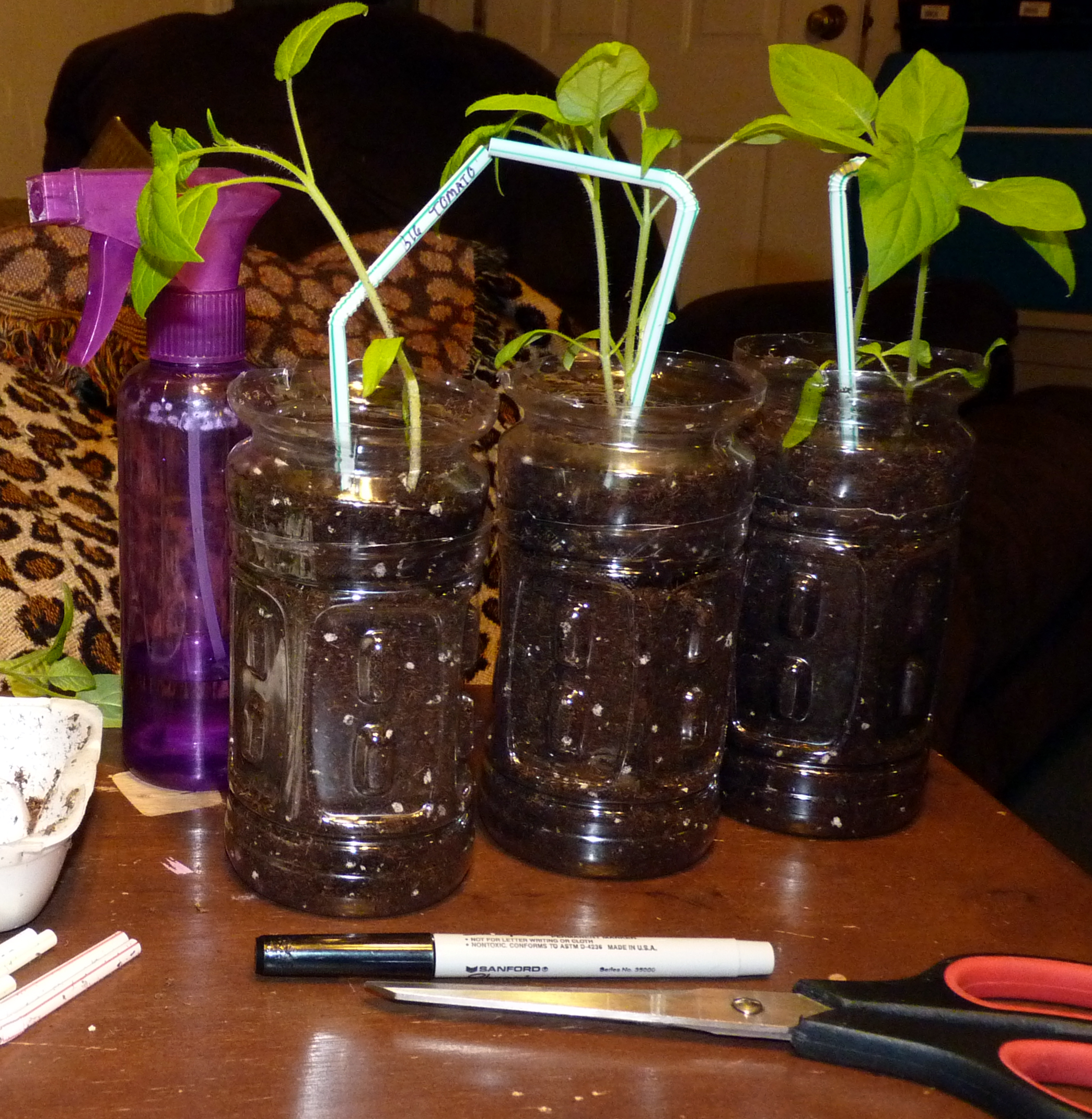
Snow (and rain too), pick up nitrogen compounds from the air. Snow especially; since the water is absorbed more slowly into the earth, deposits nitrogen into the soil that is then utilized by plants in nitrogen fixation. Even if the soil is frozen, when it thaws, it will absorb the nitrogen. Nitrogen is what gives a lawn its deep, green color. Farmers have called snow the poor man’s fertilizer, since good snows over their fields improve soil conditions naturally. After this snow finally melts away, we may be rewarded with a spring of especially rich greens and prolific blooms. In the meantime I have my houseplants and tomato and pepper seedlings, which are in need of transplant this week. They’ll be graduating from those egg cartons to plastic drinking water bottles I’ve been saving. Fingers crossed- they’re predicting a warm up to the 60’s next week! Maybe after the yard dries a bit I’ll be able to relieve this cabin fever and start prepping those beds.
Right now, outside my window, it’s snowing. Again.
-B

Victory Gardens and Daylight Savings

GrowVitaminsFrontDoorI have spring fever and I’m procrastinating working on my books today- plus I’ve still got some “Spring Forward” lag. I’ve actually heard a rumor that Missouri is considering doing away with the observance of daylight savings time. I wondered why exactly did we begin observing DST? So, I did some reading. Turns out, I couldn’t find an absolutely definitive answer, but many references cited World War I and II. In order to reduce the use of fuel used for artificial lighting, people began turning the clocks back in fall.
I read that half of Indiana observes DST and half the state doesn’t. Yeesh, how annoying would that be if you lived on the dividing line?4.2.7
What interested me amidst the DST debate was the mention of Victory Gardens. Apparently, in World War II, citizens were encouraged to grow vegetable, fruit and herb gardens to reduce pressure on the public food supply. People dug up their yards and even spaces in public parks to contribute to the production of food in the US, United Kingdom and Canada. Victory gardens could be found in backyards, on rooftops in the cities; many vacant lots were borrowed to use as cornfields. Lawn areas in Hyde Park, London; around Riverside in New York City and Golden Gate in San Francisco were all plowed and planted to publicize the victory garden movement.

During World War II, many farmers were drafted into the military and especially in Europe; farms were destroyed as the war moved through those areas. In 1917, the U.S. formed the National War Garden Commission overseeing the Victory Gardens campaign. Over five million gardens were planted, producing more than $1.2 billion in homegrown food by the end of the war. 20 million Americans tended Victory Gardens; they accounted for almost half the produce being consumed in the U.S. during World War II.
Even Eleanor Roosevelt participated in the effort, planting a Victory Garden on the White House grounds. Posters and public service booklets proclaimed “Our food is fighting!” All that produce helped lower the price of vegetables needed by the U.S. War Department; the money saved could be spent in other areas of the military.
One of the reasons for implementing daylight savings time was supposedly to aid in the tending of the Victory Gardens. With many of the men at war and women stepping in to temporarily fill jobs left behind, many women were at work during daylight hours. Extending the amount of evening daylight available, gave them an extra hour after work to tend their gardens.
SowSeedsOfVictoryThere are a few examples of Victory Gardens left in in the United States; Fenway Victory Gardens in Boston, Massachusetts (now mostly planted with flowers) and Dowling Community Garden in Minneapolis (Still veggies!) have remained active since WWII.

In recent years, the idea of the Victory Garden has resurfaced somewhat; a few have been replanted in public spaces, a websites and blogs such as http://www.modernvictorygarden.com/ promote their own Victory Gardens and encourage others to join in planting their own. In March of 2009, a garden was again planted on the White House Lawn, the first since Eleanor Roosevelt’s, to raise healthy food awareness. Many health conscious families are starting gardens for the first time, in an attempt to cut back on the hormones, pesticides and chemicals present in processed and even fresh commercial fruits and vegetables.

Now there’s one more great reason to garden… I’m doing my patriotic duty! 😉
(As if I EVER need an excuse to play in dirt.)
-B

Ghetto Greenhouse

004I learned a few things last year when I started peppers and tomato plants from seed, so I decided this year to improve on my experience. I started my plantings this year with an actual seed starting formula instead of just generic potting soil. Even though, I almost always buy Miracle Gro, this particular blend is supposed to help with good root development- which if you read my previous article, this is one of THE most important aspects of successful tomato plants: excellent root growth. It was a few more $ than the regular potting mix, but one small bag was more than enough for starting all my seedlings.

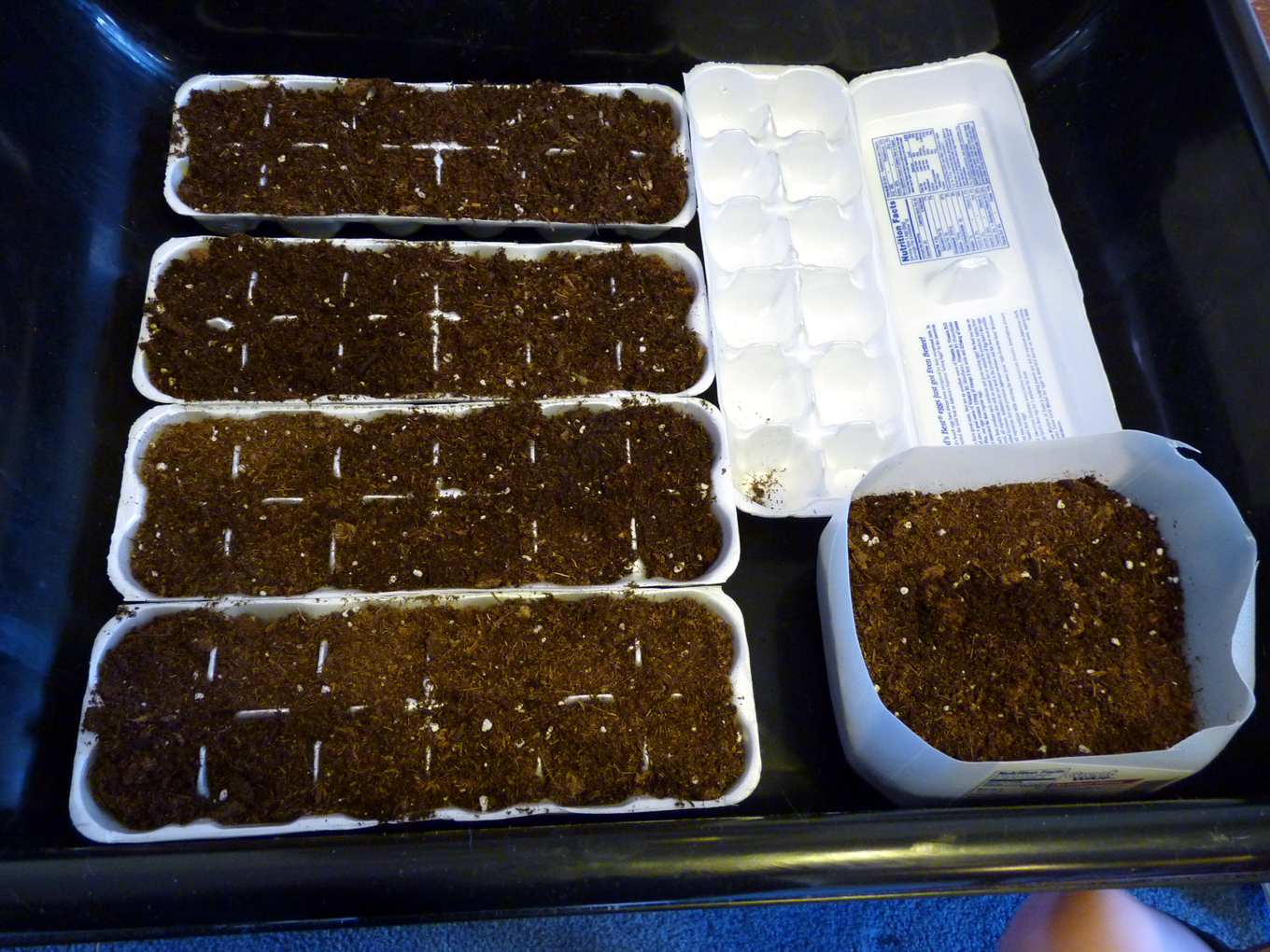
001Last year, I started  seeds in gallon milk jugs that I’d cut the tops from. I dumped all the seeds in together into the jug and set the top back on the bottom half to make mini-greenhouses. This seemed a great idea at the time, I found out that when the seedlings outgrew their milk jug homes and needed to be moved to individual containers, it was very difficult if not impossible to separate their roots without destroying some of them. This year, I opted for saving egg cartons. I tried to keep it to no more than 1 or 2 seeds per cell. I did run out of cartons and had to put a few in a lid and a few more in a halved milk jug. I tried to keep them further apart than I had the previous year though. If the individual cells work well, I’ll be sure to use all egg cartons with cells next year.
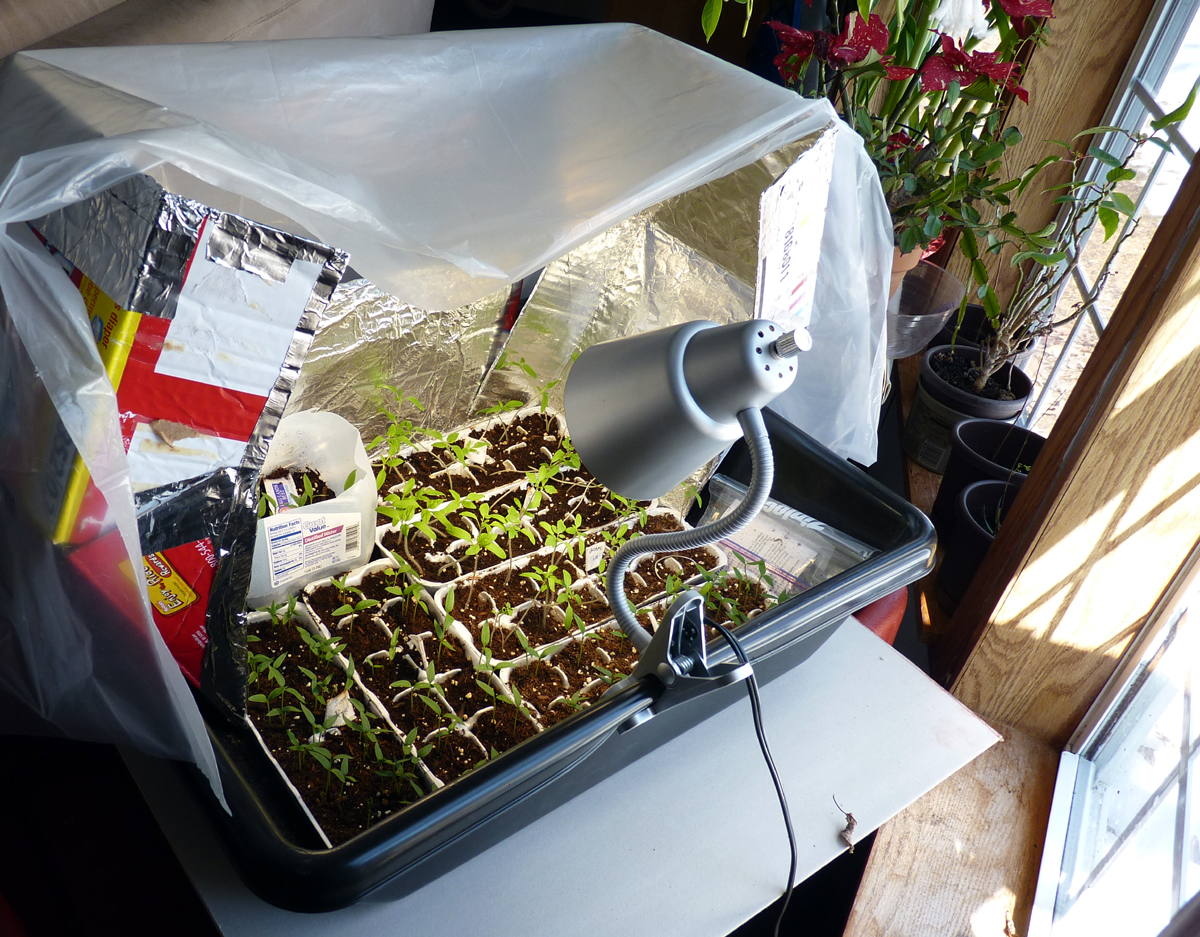
The egg cartons are sitting in a big, black plastic garden tub I picked up at Lowes for only $8. I figured it would be much nicer to move about than several different trays- I used cookie sheets to hold all my bottles and containers last year, which worked ok, but it was kind of a pain in the butt moving multiple sheets in and out when it came time to harden off the seedlings. This tub contains everything nicely, it’s waterproof, easy clean up and it’s black, so it will help absorb heat.

002We were having trouble getting those tiny little tomato and pepper seeds to stay put where we wanted them, so my daughter helped me make seed tapes. Some very tiny seeds will come from the seed companies already in paper tapes. Seed starting kits from the store often come with miniature pots made of peat and a thin, biodegradable net to keep them from falling apart until the roots create a network to hold the pete in place when removed. I cut small squares of paper towel, and sprayed them with a couple squirts from a spray bottle while she held it in her hand. We then set the seed on the wet towel, which stuck very nicely. I was able to move a bit of soil from and egg cell, put the paper down with the seed and have it stay in place while covering it back up with soil. The paper towel degrades naturally and doesn’t stop the roots from growing, just like the net-wrapped pete cells. The pete cells are convenient, but can be costly for a large set up. This method only costs you about 1 paper towel per 20 or so seeds. 🙂

003Once all our seeds were planted I used a tea spoon to lightly firm the soil over the seeds. You don’t need to really pack them down, you want the soil to stay a bit light for those tiny, tender little roots to take hold. Watering will help to further settle the soil around the seeds and help them to start germination. A fancy tool isn’t necessary for planting seeds, this old teaspoon and fingers worked well.

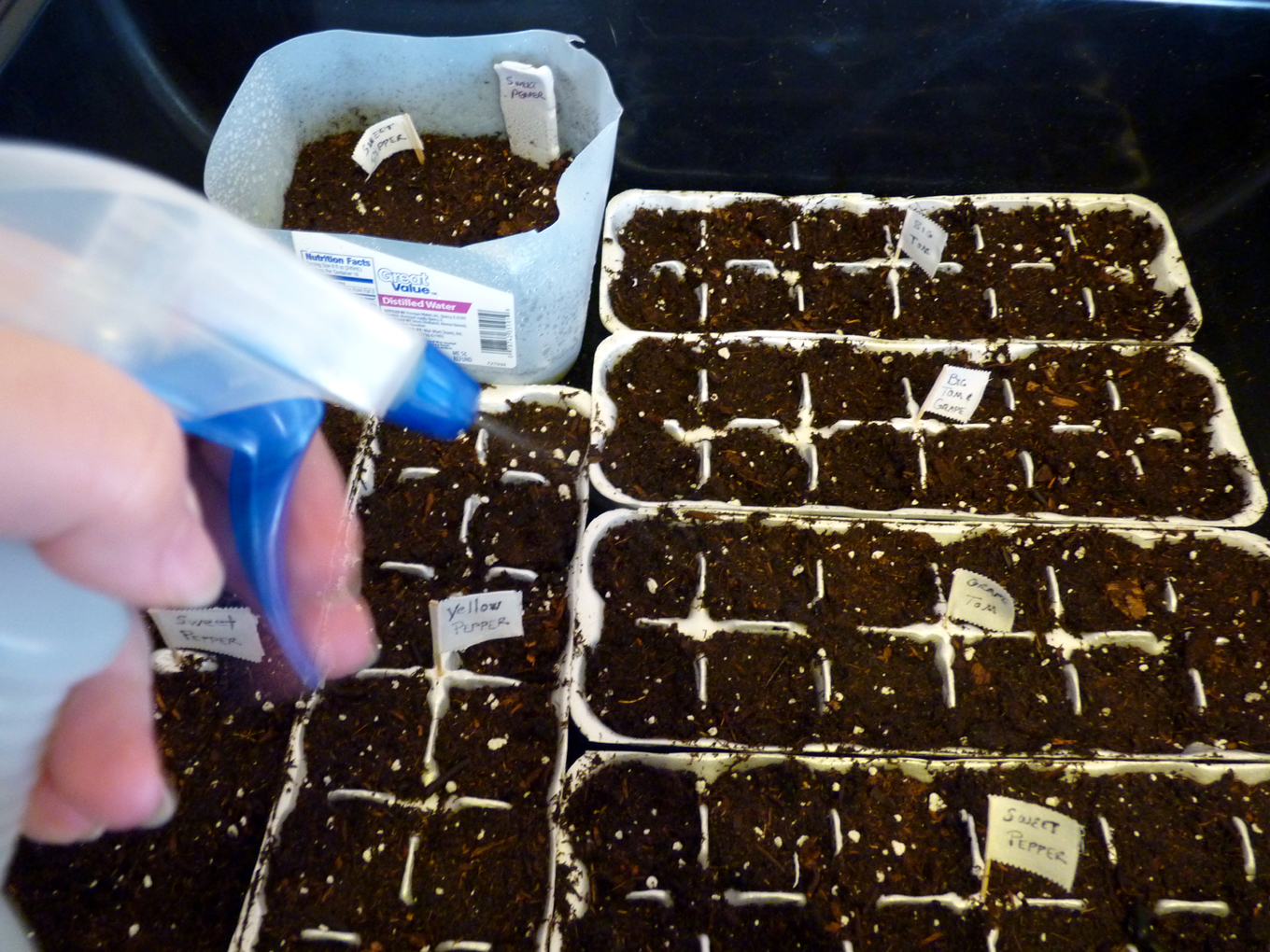
007After all the seeds are covered in soil, you’ll need to give them a good drink. I’ve found that pouring water displaces too much soil when you’re dealing with small seeds and shallow cells. I use a spray bottle filled with water, the same one I keep for training cats, cleaning houseplant leaves, etc. It cost me $2 at the grocery store. I’ll continue using this to water while the seedling are in these tiny cells. Over watering could cause mildew to develop or rot the roots.

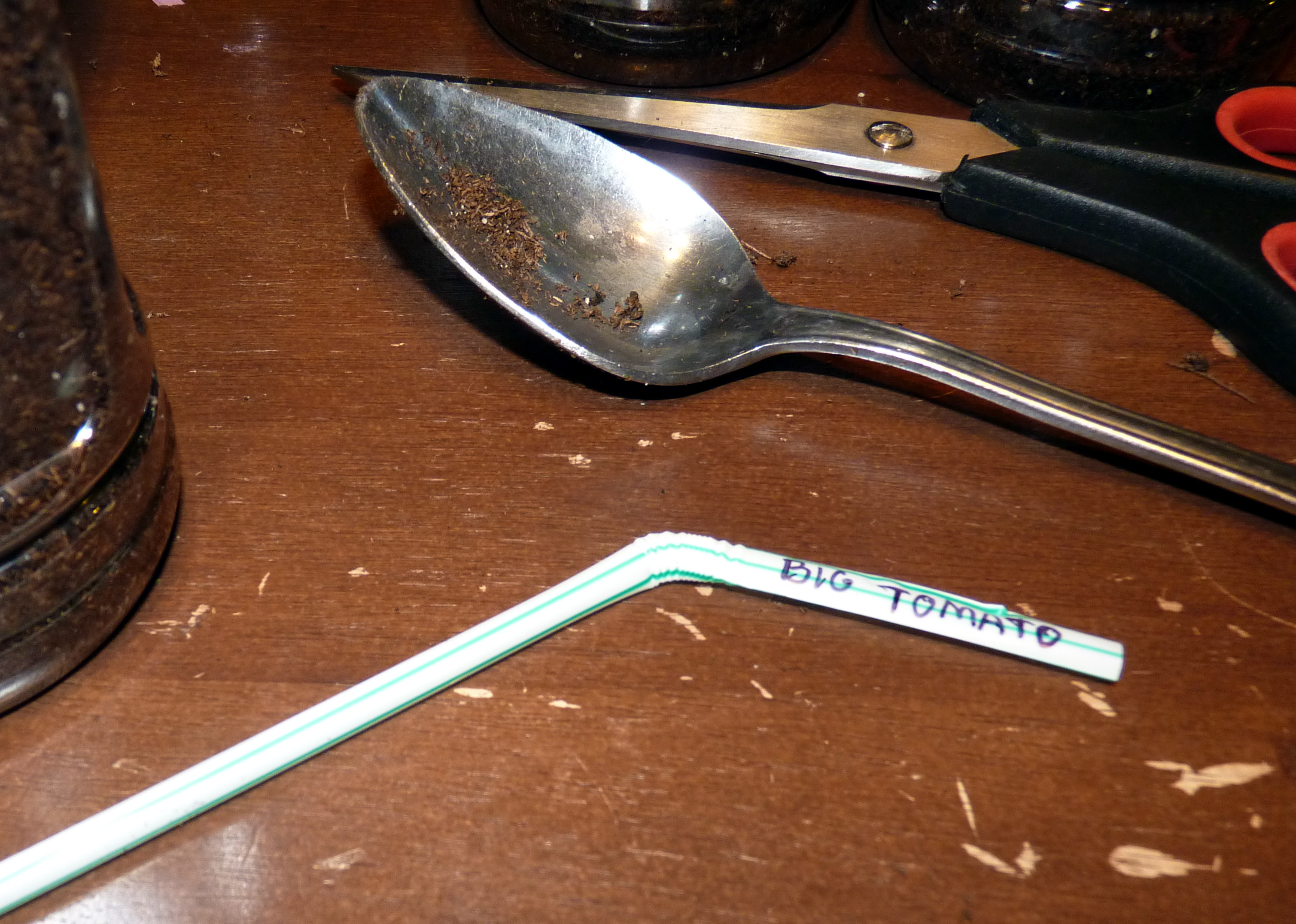
006Tomato seedlings are pretty distinctive and it isn’t difficult to differentiate between tomato and pepper plants once they get a few leaves on them. However, I planted two different types of tomatoes and two different types of peppers. If it’s important to you that you can tell what you’ve planted where later, make sure to label everything. Otherwise, you’ll be playing roulette with your seedlings when you put them out in the garden, since they won’t have identifiable fruit when they’re transplanted. I used toothpicks wrapped in cloth tape and wrote on them with a permanent laundry marker. I’ve seen people use old silverware, which looks elegant in the garden itself, Popsicle sticks, plastic cutlery- last year I cut triangles from my left over egg carton lids and wrote on those. It’s not important WHAT you use. Just make sure it’s A) Waterproof and B) Won’t degrade before your plants are ready to be moved outdoors.

009In case you forget when your plants are supposed to germinate, would like to remember the specific water, spacing or sun requirements or just want to know the  plant name so you can choose the same for next year (or brag about the particular type of heirloom you planted and grew with great success)- you’ll want to keep your seed packets or write it down somewhere. If you order your seeds online and created an account with the seller, they’ll probably have your order on file and you can refer back to it that way. Personally, I find it easiest to just hang on to the seed packets themselves. I put them in a Zip-loc baggie to keep them from getting dirty or wet and tucked them into my plastic tray right next to the seedlings. Easy reference, close at hand. Stick them in a file to reorder next year after moving your plants to the garden.

008

I put my finished seed tray in front of our big bay window, which gets all but the late afternoon sun. It’s sitting on top of my daughter’s wagon, so it moves around nicely. That’s a leftover bit of drywall board underneath it for stability. I use what I have and re-purpose what I can. I see lots of fancy shelving systems with installed grow lights and such. Get them if you feel they make your life easier, your growing space look more attractive, or whatever the reason- but know that they are absolutely NOT necessary to successfully grow plants, regardless of what the salespeople or online ads tell you. The black plastic tub with help absorb and retain warmth on the seedlings, since I don’t use seed warming mats either. I put a bit of clear plastic over the tray that was leftover drop cloth from a painting project; it helps to retain warmth and moisture while the seeds germinate. They don’t really need a grow light until they actually break through the soil.

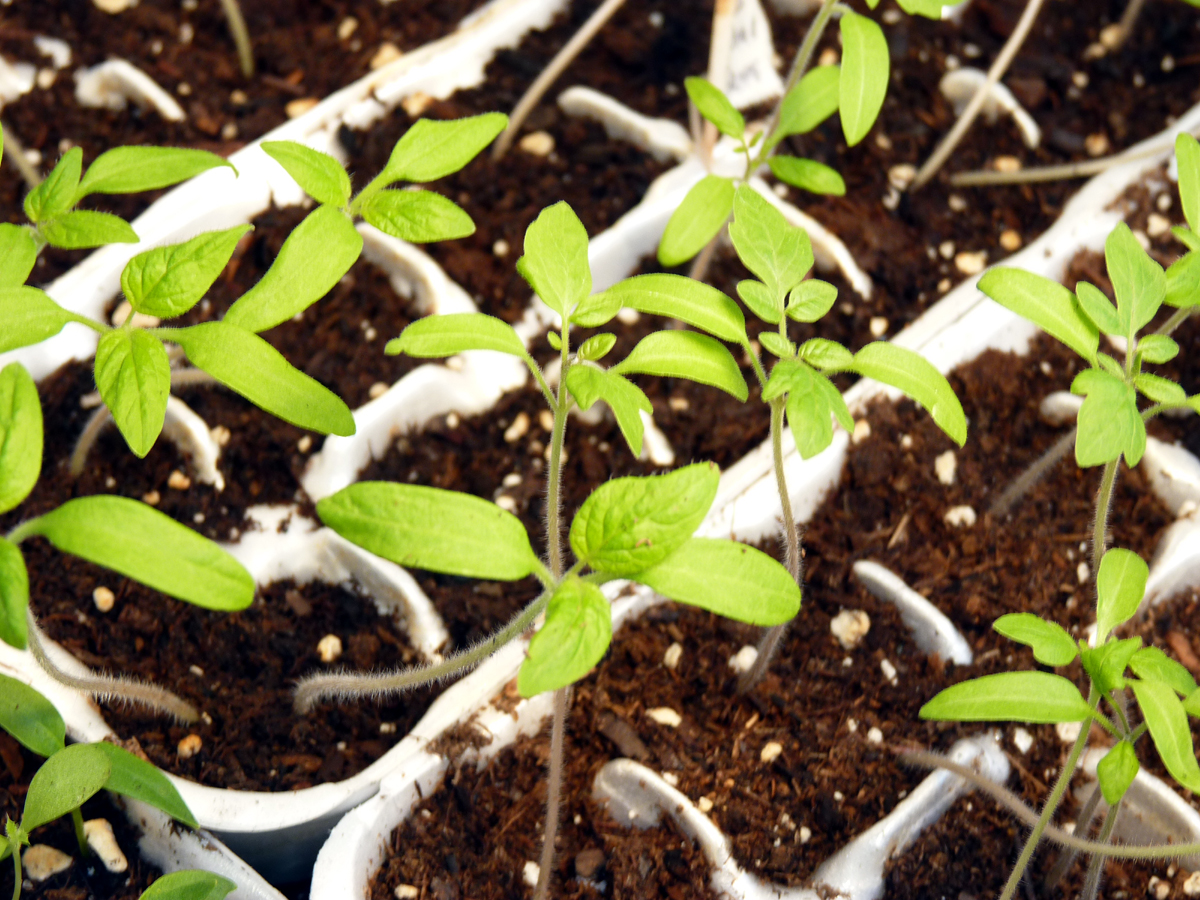
ghettogreenhouseThis photo I took today, it’s about 3 1/2 weeks from our initial plant date. You can see that I have some pretty decent sized seedlings already. The tomato plants all came up first, the peppers took about a week longer. I did notice after a week of good growth that the tomato plants were getting a bit leggy (long, thin stems from not enough light); I had this lamp in our bedroom that is adjustable, Tom picked me up a plant light bulb during a trip to Lowes to get a snow blower. The bulb was $7 plus change, but made a HUGE difference in the amount of light my seedlings were getting. I also cut up a box into three parts and covered the insides with tinfoil to act as light reflector screens. After a week, the tomato plants are already thickening up and less leggy and the peppers have all come up as well. I kept the plastic and draped it over the top- my ghetto greenhouse. Drop cloth plastic, foil, diaper box, plastic tub and some egg cartons. It’s working beautifully and I spent next to nothing on it.

LeavesTomatoes are ready for transplant when they have two sets of true leaves. These guys are already very close; I’ll probably be moving them into bottles in a week or so. My husband drinks a lot of bottled water and I drink a lot of Gatorade when I work out, so I’ve stockpiled the leftover bottles in our utility room. These were great planters last year. They let in light, they’re easy to remove when it’s time to plant and since they’re clear- I can see the root development on the plants and whether they actually need water or not.  I’ll post updates when the seedlings are ready for transplant.

-B

VD

image

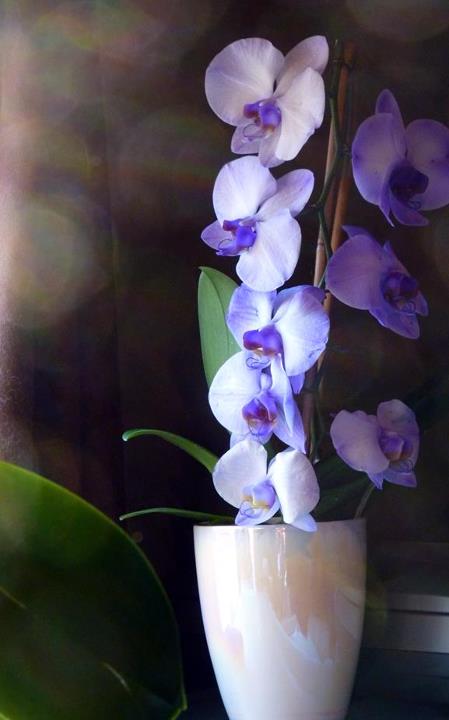
NO…I don’t need to see a doctor. That was in reference to a certain holiday.  I know it’s considered obnoxious by some to post pictures of Valentine’s flowers – but this isn’t accompanied by sappy gushing about how sweet, wonderful and amazingly considerate my husband is. Yes, he brought me these stunning purple ombre orchids on Valentine’s Day. I also told him about all the stunning purple orchids I had seen… at Gerbes… which he had to drive right by on his way back from the doctor’s office… and purple orchids would be a GREAT Valentine’s Day gift…
I probably could have held up a sign with a picture of them and been less subtle, but why press it? He took the hint. 🙂
I just wanted to share a picture of them, since plants ARE a big part of this site and they ARE really gorgeous. And to think I used to avoid these beauties because I was convinced they are hard to grow. African violets are hard to grow. These are easier than cactus, give me spectacular blooms several times a year and look so freaking cool! Even the way the roots climb out of the pot is neat. They look as if they’ll just climb out, scamper across the desk and go for a stroll.
And now you know why I have more plants than people around me.
-B

TOmato, ToMAto

Tomato01I’m just going to start by saying there is a MEGA PSYCHO-CRAP TON of information out there on growing the perfect tomatoes. I ran into several forums where they were practically ready to kill each other in the debate of which form of calcium is the best soil additive for tomato plants. I’m not a scientist folks; I’m not a farmer, not even a master gardener. I’m a mom that gets tired of worrying about where my food has been, who it was picked and packaged by and whether any of them bothered to wash their hands in the process. I also get sick of paying ridiculous prices for stuff that should have been thrown in a hog trough instead of being put on my daughter’s plate. We’ve had tomatoes from the store that looked ok on the outside, only to slice them and discover moldy seeds inside (I did NOT feed these to my daughter, in case you were wondering) or that they were half green- some looked beautiful, but had absolutely zero flavor.
A friend told me that they saw a tomato fall off a truck on its way to the store and it actually bounced and remained completely intact, going down the highway at 60+ mph. You have to wonder, what in the world have they genetically engineered into those? If you’ve experienced any of the above or similar issues with your produce, you too might be considering growing a few of your own groceries. Tomatoes are one of the first veggies people usually start with.

Tomatoes are fairly easy to grow successfully, even for a novice. They’ll grow in containers, in the ground, even upside down in bags. You can start them from seed or plants. There are tons of different varieties and types so there’s a little something for every taste. To keep this halfway readable and hopefully curb some of my tendency to ramble, I’m going to write this post in individual tips.

Let the sun shine in!
All varieties of tomatoes will benefit from full sun; recommended is 10 hours of light in summer, minimum of 6 hours direct sun per day. Seedlings should be in direct sunlight for 8 hours or get 14-18 hours under grow lights. If your tomato seedlings don’t get enough light, they’ll be leggy. Unfortunately, this doesn’t mean they’ll be top models, but it does mean that the stems will be weak and won’t support the weight at the top of the plant. The closer to the light seedling is, the stronger and bushier it will be.
Plants bought from a store generally are grown under ideal conditions: the stems are strong, the plants have plenty of leaves, root systems well developed and they’re already hardened off and ready to plant. Many first time gardeners may prefer to go with plants, they require less trial and error. Garden centers will tend to choose proven performers that grow well in your local climate and are disease resistant.

Roll over, I’m crowded…tomatoseedlings
Seedlings and young plants don’t like to be smushed together so that they can’t get air. Too little space between plants will create lazy, slow growing seedlings. As soon as they get a set of leaves, I move mine from egg cartons or a community flat into small individual containers. For tomato and pepper plants, I use 17 oz. plastic water bottles with the tops cut off. I’ve seen pins on Pinterest of people using cardboard toilet paper rolls. If you don’t feel like recycling or reusing a container, most garden centers sell individual pete pots that you can plant directly into the ground when the seedling is ready for transplant. Seedlings will benefit from being placed outside for a few hours on a warm, windy day or set in front of a fan. This helps the stems strengthen up and resist breakage when you kick them out of the house and they’re on their own.
If you plant seedlings in pete pots or cardboard containers- be certain that no portion of the container is above ground and exposed to air. If it is, the container will act like a wick, drying out the root ball and either stunting the plant’s growth or killing it outright.
When choosing seedlings in a nursery or garden center, don’t pick the most crowded, lush leaved plants you can find. These are the plants that will actually get slow starts when transplanted. Pull the plant out of the container slightly and look at the root system. A strong, well developed root system will do more for a new seedling that all that showy top growth.
If you grow your plants from seed, the new seedlings will need to be hardened off before transplanted to the garden. You don’t need to slap them around, just take them outside for a few hours each day. This is easiest to do if you have all your little containers on one big tray or trays- take your seedlings outside each day, gradually increasing their outdoors time. A slightly cloudy day with a bit of wind is the ideal first day; but the main point is, adjust them gradually. If they show signs of shock, like dropping leaves or wilting in too much sun, move them to the shade for a bit. Once they can tolerate some full sun, leave them out overnight, so long as the temperature is over 50-degrees F.

Make a bed they’ll be happy to lie in
All successful plants start with a good foundation. This is where I saw the greatest argument on forums and other sites related to successful tomato planting; they debate to the death whether soil should be tested, what additives to put in, etc., etc.
I suppose you could get all scientific about it- test your soil, adjust PH, start adding chemicals, fertilizers, lime, calcium and so forth. I’ve read detailed recipes of using starter solutions, mixing 8-8-8 fertilizers, phosphorus, lime, peat moss, apply this every two weeks, apply that at the start of the season…

If this is all sounding more like a science experiment than growing food, I’m with you, I thought so too. I had about 5 plants last summer; 3 cherry tomato, two roma- one of the cherries was even left in a pot because I was going to give it to someone and they decided they didn’t want it. I was too lazy to take it out and dig a hole, so I just sat it next to the house. I didn’t use fertilizer. I didn’t do a soil test; add lime, chemicals, or starter solutions. I used potting soil, some kitchen scraps and a compost bin. That’s it. If you have a neighbor with livestock or chickens, you’re golden. Go scoop some poop, mix it with some crushed leaves and work into the soil. Some of the absolute BEST store-bought tomatoes I’ve ever had were from our local Farris Fruit market. They sell these HUGE Mennonite tomatoes every year. I’ll bet you that the big secret behind the flavor and size of these beautiful, awesome tomatoes is probably nothing more complicated than… horse shit.Tomato02
I start my plants in Miracle grow potting soil. We have clay and rock for earth here naturally, so it has to have something added to it or you get one of two states: muck or concrete, depending on if it’s wet or dry. One of the absolute BEST garden tools I have is my compost bin. I dump yard clippings, chopped leaves, cardboard, kitchen vegetable scraps and livestock poo (when I can get it) in the compost bin. That is the ONLY fertilizer or additive I’ve put on my yard or garden for years. I don’t have to worry about keeping the animals or children off my lawn or washing everything to death before we eat it to avoid the chemicals, because there aren’t any. Use what you have. You can start a compost bin or pile in a relatively small space. You can even throw a little of the stuff directly in the garden and mulch over it, if you have it fenced and don’t have to worry about critters, it will break down naturally.
Tomato and pepper plants LOVE warm soil; a great way to prep your planting space ahead of time is to put down your scraps, leaves, etc., then cover the entire planting area with some cardboard and a layer of black landscaping fabric or plastic. Do it a few weeks before you intend to plant, or better still, do it in the fall and let it sit that way all winter. This also has the added benefit of baking the hell out of the weed and crabgrass seeds so you’re not hoeing or weeding right away.

Tuck them in and give them a blankie
So- your garden plot is ready, your seedlings are ready, now what? Dig a hole and plop them in? Eh- close. Just a couple things first…
Dig your planting holes deep enough to bury seedlings up to the first set of leaves. If you’re buying plants from the store; do the same, even if it means putting them deeper than they originally were in the pot. New roots will develop along the bare stem. I read some silly rhyme about more roots equals more fruits, but silly or not- it’s basically true. The stronger and deeper your root system is, the better the plant will produce. So give them lots of root space and bury them deep. Seedlings that are too wobbly can even be trenched: Dig a trench, pull off all but the uppermost leaves and bury the stem under 2-3 inches of soil. Don’t pack it too tightly around the upper portion to prevent breaking it off and be careful when driving your cages or stakes so you don’t puncture the plant. Don’t worry about them growing sideways, the plant will develop roots all along the stem and straighten up as it moves towards the light.
Even if you aren’t trenching your plants, they may benefit from removal of the bottom leaves once they are about 3 ft. tall. These are the leaves that get splatter from the soil when watered and are usually the first to show fungus issues.
Once your plants are all tucked in and the soil has warmed up (mulch will keep cold soil cold longer) cover them with mulch. Mulch is a young plant’s best friend. It prevents root burn, retains moisture, attracts worms to your soil bed (unfortunately armadillos too and I’ll be writing about this later) and helps hold all those carefully worked-in nutrients in place when you water or it rains. Leaf, straw and wood mulches also break down into the soil over time and add to your compost. Some claim that red mulch reflects red light wavelengths back up onto your tomato plants, which supposedly stimulates their growth. If you can’t find red, it’s ok; regardless of its color, mulch is beneficial to your plants.

If you want your plant to be a lush, give it a drink
Every plant needs some form of moisture to grow, even cacti and succulents. Tomatoes need a fair amount of supplemental water, unless you’re lucky enough to live in an area where it rains like clockwork. Last year, our little part of the world had not only record high temps, but a very long lasting and severe drought. We wound up at the end of the year with a 14 inch or so rain deficit.tomato04
I watered our entire garden almost every other day this past summer. The ideal is to water your plants deeply (6-8 inches deep) once a week or 2-3 times a week at the height of summer. Consistency is one of the keys in tomato watering.
I heard SO many complaints about blossom rot on tomato plants last year and one of the most common causes of blossom rot is poor watering practices. The other is calcium deficiency in the soil, which can also be caused by too much watering. Under-watering and then suddenly giving too much water can not only create conditions for blossom rot, it can split fruits as well- causing them to absorb too much water too fast.
Too frequent watering doesn’t allow the sugars to develop in the fruit; so you won’t get maximum flavor potential from your tomato. Consistency, consistency, consistency- if you can’t be bothered, or remember to water regularly and deeply- then you should attach your hose up to a $10 timer. If the plants are stressed from lack of water, especially if you see wilting at the leaves, they may drop their blossoms or their fruit. Caveat to this: I have read that if the plant wilts a bit in the middle of the day that this is normal because tomatoes will close their stomas in the hottest part of the day to prevent water loss by transpiration. If they look like this in the morning though, they need water.

I save my egg shells for a couple months prior to planting tomatoes and add the crushed up shells to my soil when I move my seedlings into the garden. This helps to slowly release calcium into the soil in the event that it is washed out by too much water. Egg shells are also good slug and snail repellent, they don’t like dragging their soft bodies over all those sharp little edges.  I didn’t have any issues with blossom rot until the very end of the season last year, when my egg shells finally began to be depleted. (I also got lax in my watering practices, which could also have been the culprit) If you’ve been watering consistently and are pretty sure calcium is the problem, I’ve heard that a little antacid (calcium carbonate) crushed up and side-dressed (added to the soil next to the plant’s roots, not directly to the roots) into the soil can be a great quick fix. Side-dressing prevents burning tender roots, especially when adding fertilizers. For long term calcium control, I swear by my eggshells- and if you’re already eating the eggs in them, re-using the shells costs you nothing.

Help them hold their heads high
I’ve seen lots of methods of staking tomato plants and even some growing methods like the Topsy Turvy that can ignore staking altogether. It’s just the nature of the plant, they grow heavy fruits on thin stems and the plant needs supplemental support to keep from sitting on the ground where the fruit and leaves will rot.Garden2012
You should stake or cage your plants right after you put them in the ground. Just about anything can be used; wooden stakes, poles, teepees or wire cages. I grew cherry tomato plants on my yard fence last year, letting them vine along the fence just like a morning glory would. Instead of cages and trellis or teepee supports; I’m growing my tomatoes, beans, cucumbers, roses and anything else that climbs right up the side of my house. Our siding is butt-ugly, so I put screws in the house in about a 1 ft. block pattern from ground to roof and strung pliable galvanized wire on the screws. Not all of you are going to want to put permanent trellises directly into your siding, I realize.
There are TONS of options for tomato cages out there, it simply comes down to personal preference and aesthetics, which method of support you decide to use. The only thing you really need to remember is that the cage should be strong and sturdy enough to support the weight of a fully grown tomato plant- you’ll be surprised how heavy these little suckers can get! Recommended is 5.5 – 6 ft in height of concrete reinforcing wire or pasture wire for cages.
For ties, any material that won’t cut in to the plant’s stems is ok- I’ve seen everything from panty hose to pipe cleaners.

Ow quit it! Pinching and Picking
Non-fruiting suckers that develop in a crook between two stems can be removed to encourage development of the rest of the plant, especially toward fruit growth- which is kind of the whole purpose for planting tomato plants in the first place. Let the big leaves alone. (I started to write: “Leave the big leaves alone, but that sounded redundant) Removing too many leaves can let the sun burn your fruit, but a little pruning off the top and removal of suckers is helpful.tomato3
Pick your produce often to encourage the plant to produce more flowers and fruit. Taste is also a factor, some cultivars can develop an odd texture if left on the vine too long.
Store your picked fruit in a cool, dry place- not the refrigerator, it will cause them to loose flavor and I’ve found some garden tomatoes just turn to instant mush in the fridge. Try different varieties to see what suits your palette best. Last year we grew romas and cherry tomatoes. This year, I’m trying an heirloom beefsteak variety and a grape. In the fall, right before first freeze, you can harvest even your green tomatoes and store them for later. They won’t have the flavor of vine-ripened, but mine were still better than store bought. I put the greens in a brown paper bag and removed the ripe ones every few days until we’d eaten them all.
If you store your stakes, cages or ties inside- they might benefit from a bleach water wash before using them again the next season.

I didn’t delve into a lot of the tomato pests and diseases here, since this is primarily meant to be a guide to grow them under the best conditions to prevent many of those issues in the first place. However, Wiki has a very comprehensive list of tomato plant diseases and problems here:  http://en.wikipedia.org/wiki/List_of_tomato_diseases if you’d like a good guide.

Hope all this was helpful! I’d love to see comments about methods, your tips & tricks or growing success.
-B